The journal · Feeding
How to Increase Milk Supply: What Actually Works (and What Doesn't)
In short
Milk works on supply and demand: the more milk that comes out, the more your body makes. So the real lever for increasing milk supply is removing milk more often — nursing 8 to 12 times in 24 hours including at night, offering both sides, emptying the breast, and adding pumping or hand expression between feeds. Before you change anything, check whether your supply is genuinely low, because most of the classic scare signs (soft breasts, short feeds, a baby who takes a bottle afterward) are not signs of low supply at all. The AAP says the foods and supplements marketed to boost milk are not necessary, and the NIH's own drug-and-lactation database found the evidence on fenugreek contradictory. If your baby is not gaining or diapers are short, call your pediatrician the same day.
It is 2 a.m., the baby has been on and off the breast for an hour, and the thought arrives fully formed: I am not making enough. Almost every nursing parent has that thought at some point, usually in the dark, usually while holding a baby who seems to disagree with everything you have read about how feeding is supposed to go.
Here is the good news, and it is the part most articles bury: the thing that actually increases milk supply is simple, free, and available to you tonight. It is not a tea, a cookie, or a capsule. It is milk removal. Below is what the AAP, the CDC, USDA WIC, La Leche League, and the National Institutes of Health actually say — with nothing invented in the gaps.
01First: is your supply actually low?
This step is not a formality. A lot of the effort spent chasing supply gets spent by people whose supply was fine, and the chasing itself is exhausting. La Leche League Canada lists the things parents most often mistake for low production, and almost none of them mean what they seem to:
- Feeds that come at wild intervals. Babies may feed anywhere from every 20 to 90 minutes, or cluster several feeds close together. Irregular is normal.
- Breasts that feel soft. After about six to eight weeks, breasts commonly stop feeling full between feeds. That is your body calibrating, not running dry.
- Small breasts. Breast size does not correlate with how much milk you can make.
- A baby who wakes the moment you put them down. That is a newborn seeking comfort, not a hunger verdict.
- A baby who takes a bottle right after nursing. Babies will often take a bottle regardless; it does not prove the breast was empty.
What does tell you something is your baby's output and weight. La Leche League Canada says that after the first week, "we expect to see 6-8 heavy wet diapers per 24 hours and 3-5 poops" that are at least big enough to cover a coin about 2.5 cm (1 inch) across, and that most babies are "back to their birth weight by two weeks," then "continue to gain 150-200 grams (5-7 oz) per week."
The AAP puts the same picture slightly differently: babies getting enough milk "lose no more than 8%-10% of their birth weight in the first few days," "nurse at least 8 to 12 times every 24 hours," "have 6 or more wet diapers per day, with nearly colorless or pale yellow urine, by 5 to 7 days old," and "seem satisfied and happy for an average of 1 to 3 hours between feedings." The CDC adds two things you can notice in the moment — "you can see and hear your baby swallowing while breastfeeding" and "your baby seems content after a feeding" — plus the milestone that matters most: it is normal to lose weight in the first week, but babies "should be back to their birth weight by day 10 to 14."
If those check out, your supply is probably doing its job. Our guide to whether your baby is getting enough breast milk goes through the signs one at a time. If they do not check out, keep reading — and call your pediatrician today, not next week.
02The one thing that actually raises supply
Milk production runs on removal. La Leche League Canada states it in one sentence: "The primary way to increase milk production is to remove milk frequently from the breast." USDA WIC says the same thing from the other direction — "the more you feed on demand, the more milk you make" — and describes the system as one where "your body makes exactly what your baby needs."
That is the whole mechanism, and it explains why so much of the standard advice is beside the point. An empty breast is a signal to produce more. A breast that stays partly full is a signal to produce less. Everything below is just different ways of sending the first signal more often.
How to increase milk supply, in order of what matters most
- Feed often — 8 to 12 times in 24 hours, night included. La Leche League Canada advises feeding "frequently in the early weeks, starting within the first hour after birth," aiming for "8-12 times a day including several night feedings." WIC puts it plainly: "Breastfeed every time your baby is hungry." The night feeds are not optional extras here — skipping them is skipping removal.
- Fix the latch before anything else. WIC's first listed step is "make sure your baby is latching well." A baby who is attached poorly can nurse for forty minutes and take very little, which reads as low supply and is not. Our walkthrough on getting a good latch covers what a deep latch looks and feels like.
- Offer both breasts at each feeding, and "empty your breasts at each feeding" — by hand expression or pump if your baby does not finish the job (WIC).
- Switch back and forth. La Leche League Canada recommends switch nursing — moving between breasts more than once in a feed — along with breast compressions during feeds to keep milk flowing while your baby is actively drinking.
- Add pumping between feeds. WIC advises pumping or expressing "frequently between nursing sessions." La Leche League Canada notes that when you are pumping to build supply, pumping 8 or more times a day matters more than how long each session lasts — frequency beats duration.
- Get skin to skin. Both WIC and La Leche League Canada list skin-to-skin contact as a way to support milk production; La Leche League Canada also recommends laid-back nursing positions.
- Use hand expression if the latch is the problem. La Leche League Canada recommends it specifically for latch difficulties — it removes milk when the baby cannot.
03Check the pump before you blame yourself
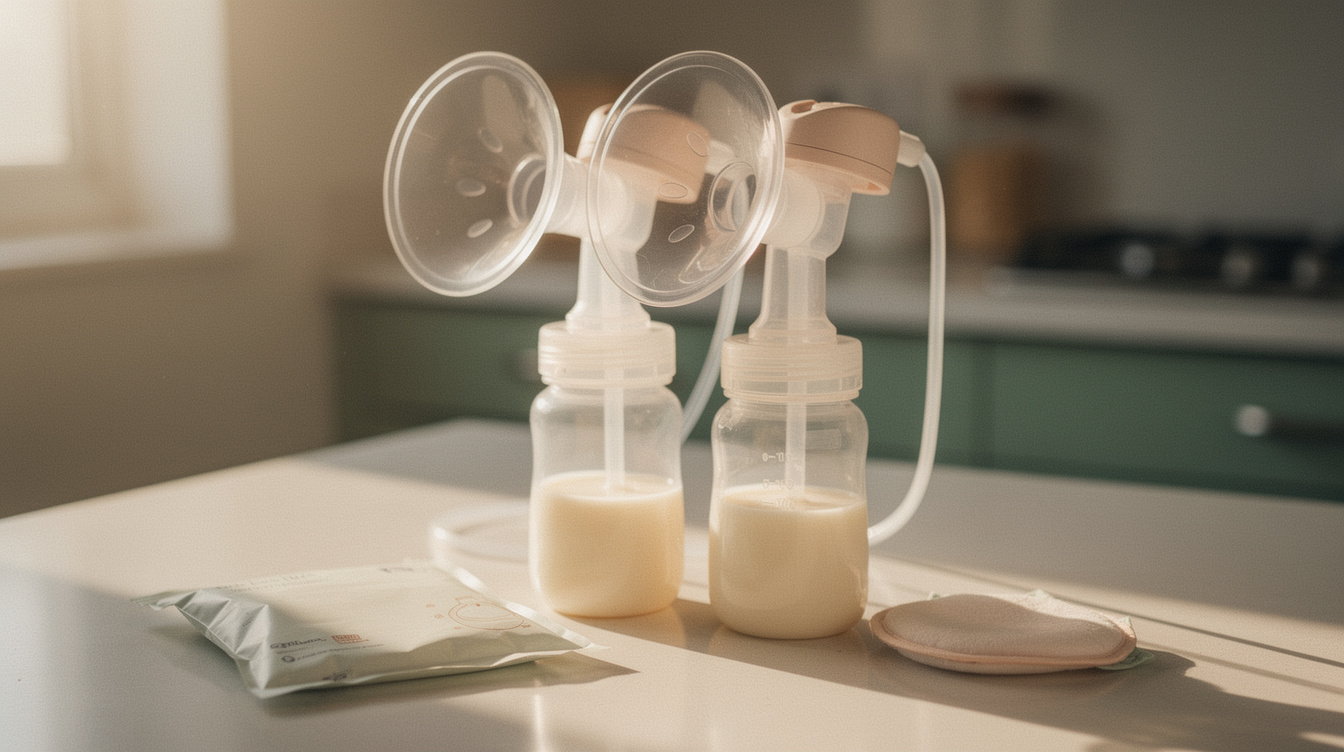
One of the five steps in the AAP's own low-supply guidance is, in its words, to "tech check your breast pump." This is worth doing early, because a pump that fits badly quietly under-performs every single session and nothing about that failure feels like equipment.
The AAP makes two concrete points: "ensuring a proper flange fit can optimize pumping," and "a double electric pump is best when needing to express breastmilk." The flange is the funnel-shaped piece that sits against the breast — the size that came in the box is not automatically your size, and a lactation consultant can measure you for the right one.
04Things that can pull supply down
WIC lists what can work against milk production: limiting nursing sessions, supplementing with formula, starting solid foods early, certain medications, not getting enough sleep, alcohol and smoking, and previous breast surgery.
On supplementing specifically, the AAP's advice is not "never" — it is about order. Its third step is: "if you are supplementing with formula, offer breast milk first." Feeding at the breast first keeps the removal signal intact; the top-up comes after.
La Leche League Canada adds risk factors that sit outside your control and are worth naming out loud so you stop assigning them to yourself: epidural or IV fluids affecting how effectively a baby sucks, a poor latch or tongue tie, scheduled or timed feedings that restrict removal, breast surgery, insufficient glandular tissue, hormonal issues, and retained placenta interfering with the hormonal signal. Several of those are fixable, and none of them are a verdict on you.
05About lactation teas, cookies, and fenugreek
This is the part of the internet that will happily sell you something, so here is what the sources actually say. The AAP is direct: "specific foods or supplements you may see marketed to promote breastmilk production are not necessary." What it does emphasize is the unglamorous version — "staying hydrated and getting good nutrition are very important to breast milk production," built on eating well and drinking plenty of water.
Fenugreek is the most-recommended herb on the list, so it is worth looking at closely. The NIH's Drugs and Lactation Database (LactMed) notes that fenugreek "has been used in many geographical regions worldwide as a galactogogue to increase milk supply" — and then reports that the evidence does not agree with itself: "one meta-analysis found fenugreek to have a mild galactogogue effect and unknown safety profile, while another meta-analysis found no good evidence that it is a galactogogue." On one trial it records that "fenugreek seed capsules did not show an increase in milk volume at day 4 and there is very low certainty evidence that fenugreek seed capsules do not increase milk volume at day 10."
The line worth remembering from the NIH
LactMed's own summary of the whole category: "Galactogogues should never replace evaluation and counseling on modifiable factors that affect milk production." In plain terms — nothing you swallow substitutes for someone actually watching a feed, checking the latch, and looking at how often milk is coming out. If you do want to try a supplement, run it past your provider first: LactMed notes fenugreek can cause gastrointestinal side effects "such as diarrhea, flatulence, nausea, and vomiting," that "cross-reaction with chickpeas, peanuts, and other legumes is possible," that "it can also interact with warfarin to cause bleeding," and that its "most unusual side effect is the imparting an odor of maple syrup to the urine, sweat, feces, and possibly breastmilk."
06Take care of the person making the milk
The AAP's fourth step is "take time to care for you," and it belongs on a supply list rather than a wellness one. WIC names insufficient sleep as something that can work against production. Nobody with a newborn is getting eight uninterrupted hours, but the difference between fragments of sleep and none at all is real, and it is usually made up of things other people can do for you: a stretch of sleep covered by a partner, meals that arrive already cooked, and the visitor who holds the baby instead of expecting coffee.
If the overnight stretch is where this is breaking down, that is exactly the gap overnight newborn help exists to cover — someone awake with the baby so the feeding parent gets a real block of sleep between feeds.
07When to stop troubleshooting and call someone
Supply questions have a deadline, because a baby who is not getting enough cannot wait out a week of experimenting. The CDC sets the threshold with no ambiguity: "speak to your baby's health care provider right away if you are worried about your baby's health or that they are not getting enough to eat."
- Weight. Your baby has not regained birth weight by day 10 to 14 (CDC), or is not gaining roughly 150-200 grams (5-7 oz) a week after that (La Leche League Canada).
- Diapers. Fewer than 6 wet diapers a day by 5 to 7 days old, or urine that is not nearly colorless to pale yellow (AAP).
- Feeding. Fewer than 8 to 12 feeds in 24 hours, or you cannot see or hear swallowing during a feed (CDC).
- Your own health. The AAP's fifth step is to "consider other health factors" — it names the return of your menstrual cycle, thyroid issues, infections, premature birth, cesarean delivery, multiple births, and previous breast surgery as things that can affect supply.
- Get expert eyes on a feed. The AAP: "an evaluation by a board-certified lactation consultant can also help you discover any other possible causes of low breast milk supply."
One appointment worth booking regardless: the AAP recommends scheduling a newborn's "first checkup with the pediatrician or family physician no more than 48 hours after hospital discharge" — largely to get an early weight on the record, which is the number every later supply conversation is measured against.
This is general information, not medical advice
Milk supply, weight gain, medications, and supplements are all specific to you and your baby, and the people who can actually assess them are your pediatrician, your OB or midwife, and a board-certified lactation consultant who can watch a real feed. If your baby is not gaining, diaper counts are short, or feeding hurts, call your provider — that is exactly what they are there for.
08The honest summary
Increasing milk supply is less a trick than a rhythm: take milk out more often, make sure it is actually coming out when you do, get the pump fitted properly, sleep whenever the house will let you, and bring in a professional before you have spent three weeks worrying alone. The supplements aisle is the last place to look, not the first — the AAP says it is not necessary, and the NIH says it is no substitute for someone evaluating what is really going on.
The rest of the early feeding learning curve — latch, pumping, diapers, weight, and the parts nobody warns you about — is collected in our newborn basics guide, sourced the same way this page is.
Questions parents actually ask
How can I increase my milk supply fast?
By removing milk more often, starting now. La Leche League Canada states that the primary way to increase milk production is to remove milk frequently from the breast — aiming for 8 to 12 feeds a day including several night feedings, offering both breasts, and adding pumping or hand expression between feeds. WIC gives the same core advice: breastfeed every time your baby is hungry, make sure the latch is good, and empty the breasts at each feeding. There is no faster route than that, and anything sold as one has not been shown to work.
How do I know if my milk supply is actually low?
Look at output and weight, not at how your breasts feel. The AAP says a well-fed baby nurses at least 8 to 12 times every 24 hours, has 6 or more wet diapers a day with nearly colorless or pale yellow urine by 5 to 7 days old, and seems satisfied for 1 to 3 hours between feeds. The CDC adds that babies should be back to birth weight by day 10 to 14. Soft breasts, short feeds, irregular feeding times, and a baby who takes a bottle after nursing are all listed by La Leche League Canada as things people mistake for low supply.
Does fenugreek increase breast milk?
The evidence is contradictory. The NIH's LactMed database reports that one meta-analysis found a mild effect with an unknown safety profile, while another found no good evidence that fenugreek is a galactagogue — and that fenugreek seed capsules did not increase milk volume at day 4 in one trial. LactMed also notes possible digestive side effects, cross-reaction with legumes like chickpeas and peanuts, an interaction with warfarin, and a maple-syrup odor in urine, sweat, and possibly breast milk. Its own conclusion is that supplements should never replace evaluation of the factors that actually affect production.
Do lactation cookies and teas work?
The AAP's guidance on low milk supply says the specific foods and supplements marketed to promote breast milk production are not necessary. What it does stress is staying hydrated and getting good nutrition. Cookies and teas are not dangerous, but they are not the lever — frequent, effective milk removal is.
Does pumping between feeds actually help?
Yes, because it is more milk removal, which is the signal your body responds to. WIC advises pumping or expressing frequently between nursing sessions. La Leche League Canada notes that when pumping to build supply, doing it 8 or more times a day matters more than how long each session lasts. The AAP adds a practical detail worth checking first: a proper flange fit can optimize pumping, and a double electric pump is best when you need to express milk.
When should I call the doctor about low milk supply?
The CDC says to speak to your baby's health care provider right away if you are worried about your baby's health or that they are not getting enough to eat. Concrete triggers: your baby has not regained birth weight by day 10 to 14, has fewer than 6 wet diapers a day by 5 to 7 days old, is feeding fewer than 8 to 12 times a day, or you cannot see or hear swallowing during feeds. The AAP also recommends an evaluation by a board-certified lactation consultant to uncover other possible causes.
Sources
- HealthyChildren.org (AAP) — Low Breast Milk Supply: 5 Steps That Can Help — The five steps (visit your child's health care provider; tech check your breast pump; if supplementing with formula, offer breast milk first; take time to care for you; consider other health factors); proper flange fit can optimize pumping; a double electric pump is best when expressing; staying hydrated and good nutrition are very important to milk production; specific foods or supplements marketed to promote breast milk production are not necessary; health factors including return of the menstrual cycle, thyroid issues, infections, premature birth, cesarean delivery, multiple births, and previous breast surgery; evaluation by a board-certified lactation consultant can help find other causes.
- HealthyChildren.org (AAP) — How to Tell if Your Breastfed Baby is Getting Enough Milk — Babies getting enough milk lose no more than 8%-10% of birth weight in the first few days; nurse at least 8 to 12 times every 24 hours; have 6 or more wet diapers per day with nearly colorless or pale yellow urine by 5 to 7 days old; seem satisfied and happy for an average of 1 to 3 hours between feedings; stool expectations by day; first checkup with the pediatrician or family physician no more than 48 hours after hospital discharge.
- CDC — Newborn Breastfeeding Basics — Baby is breastfeeding often, 8-12 times per day (24 hours); you can see and hear your baby swallowing while breastfeeding; your baby seems content after a feeding; your baby is steadily gaining weight; it is normal to lose weight in the first week but babies should be back to birth weight by day 10 to 14; speak to your baby's health care provider right away if you are worried they are not getting enough to eat.
- USDA WIC Breastfeeding Support — Low Milk Supply — Supply and demand — your body makes exactly what your baby needs, and the more you feed on demand, the more milk you make; breastfeed every time your baby is hungry, 8-12 times every 24 hours in the early weeks; make sure your baby is latching well; offer both breasts at each feeding; empty your breasts at each feeding; pump or express frequently between nursing sessions; skin-to-skin contact and breast massage; factors that can lower supply including limiting sessions, formula supplementation, early solids, certain medications, insufficient sleep, alcohol and smoking, and prior breast surgery.
- La Leche League Canada — Low Milk Production? How to know, and what to do about it — The primary way to increase milk production is to remove milk frequently from the breast; feed frequently in the early weeks starting within the first hour after birth, 8-12 times a day including several night feedings; true signs of low supply (back to birth weight by two weeks, 150-200 g / 5-7 oz gain per week, 6-8 heavy wet diapers and 3-5 poops at least 2.5 cm across per 24 hours after the first week); false signs (irregular or cluster feeding, softer breasts after 6-8 weeks, small breast size, waking when put down, taking a bottle after nursing); risk factors (epidural or IV fluids, poor latch or tongue tie, scheduled feedings, breast surgery, insufficient tissue, hormonal issues, retained placenta); techniques (skin-to-skin and laid-back positioning, switch nursing, breast compressions, pumping 8+ times daily with frequency mattering more than duration, hand expression).
- NIH Drugs and Lactation Database (LactMed) — Fenugreek — Fenugreek has been used worldwide as a galactagogue; one meta-analysis found a mild galactagogue effect with unknown safety profile while another found no good evidence it is a galactagogue; fenugreek seed capsules did not show an increase in milk volume at day 4 and very low certainty evidence that they do not increase volume at day 10; gastrointestinal side effects such as diarrhea, flatulence, nausea and vomiting; cross-reaction with chickpeas, peanuts and other legumes is possible; interaction with warfarin causing bleeding; maple syrup odor in urine, sweat, feces and possibly breast milk; galactagogues should never replace evaluation and counseling on modifiable factors that affect milk production.
Newborn Weeks is planning help, not medical advice — always follow your own doctor, midwife, or pediatrician.
From the gear guide
- Hauck Sport Travel Stroller — our pick in travel strollers
- Mompush Wiz 2-in-1 Stroller — our pick in travel strollers
- Dekor Eko Classic Diaper Pail Gift Set — our pick in diaper pails
- LittleHippo Mella — our pick in night lights
Keep reading
 Newborn basics · 13 min read
The Newborn Startle Reflex: Why Their Arms Fly Out (and When It Stops)
The newborn startle reflex (Moro reflex) makes your baby's arms fly out at nothing. What it is, when it fades, and how to stop it waking them.
Read the article Pregnancy · 12 min read
Braxton Hicks Contractions: What They Feel Like, and How to Tell Them From Labor
Braxton Hicks contractions are practice contractions, not labor. What they feel like, when they start, how to tell them from real labor, and when to call.
Read the article Feeding · 11 min read
Breast Engorgement: What Actually Relieves It When Your Milk Comes In
Breast engorgement peaks around day five. What actually relieves it: frequent feeding, softening before the latch, and cold between feeds. Source-cited.
Read the article