Newborn basics · Part 1 of 6
Feeding Your Newborn
Feeding is one of the biggest parts of life with a newborn, and it is completely normal to wonder whether you are doing it right. The good news: your baby comes wired with signals, and there are simple checks that tell you things are on track. This guide gathers what the American Academy of Pediatrics (AAP) and other trusted health organizations say about how often to feed, how to spot hunger, and how to know your baby is getting enough.
01How often and how much
-
Breastfed newborns eat a lot: at least 8 to 12 times, or more, in every 24 hours, according to the Office on Women's Health.
Newborn stomachs are tiny, so small, frequent feedings are exactly how they are built to eat.
Source: Office on Women's Health -
Very young breastfed babies do not eat on a neat schedule. It is okay if your baby eats every 2 to 3 hours for several hours in a row, then sleeps for 3 to 4 hours.
Frequent nursing also tells your body to keep making milk.
Source: Office on Women's Health -
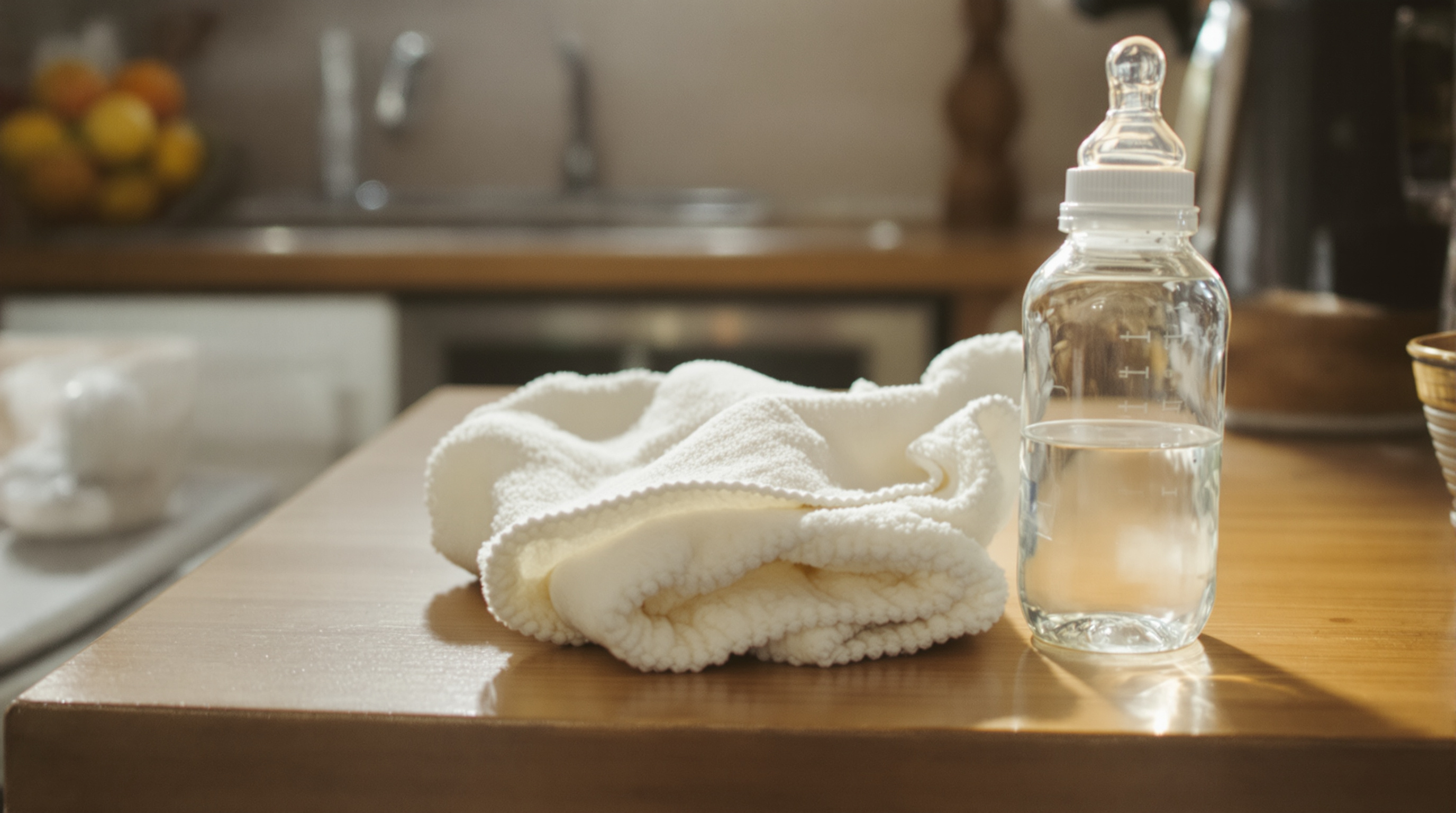
Most formula-fed newborns eat every 2 to 3 hours, and about 8 feedings in 24 hours is generally the recommended minimum, per the AAP.
In the first day or two, babies may take only about half an ounce per feeding; after that, most drink 1 to 2 ounces at each feeding.
Source: HealthyChildren.org (AAP) - The AAP notes that in the first week, formula-fed babies should be eating no more than about 1 to 2 ounces (30 to 60 ml) per feeding, then gradually work up to 3 to 4 ounces (90 to 120 ml) per feeding over the first month, typically every 3 to 4 hours. Source: HealthyChildren.org (AAP)
02Hunger cues: how your baby asks to eat
- The CDC lists these early hunger cues for babies from birth to 5 months: putting hands to their mouth, turning their head toward your breast or the bottle, puckering, smacking, or licking their lips, and clenched hands. Source: CDC
- Crying is often a late sign of hunger, per the CDC, so try to offer a feeding when you spot the earlier cues, before the tears start. Source: CDC
- Your baby also tells you when they are full: closing their mouth, turning their head away from the breast or bottle, and relaxing their hands are the CDC's fullness cues for this age. Source: CDC
03The diaper check: is my baby getting enough?
- By 5 to 7 days old, a well-fed baby typically has 6 or more wet diapers per day with nearly colorless or pale yellow urine, according to the AAP. Source: HealthyChildren.org (AAP)
- Dirty diapers count too: the first stools are blackish and tarry, turn greenish-to-yellow around days 3 to 4, and by about day 5 to 7 most babies have at least 3 to 4 loose yellow stools a day. Source: HealthyChildren.org (AAP)
- Some early weight loss is normal: the AAP notes babies should lose no more than 8 to 10 percent of their birth weight in the first few days before starting to gain again, which is why a pediatrician checkup within 48 hours of hospital discharge is recommended. Source: HealthyChildren.org (AAP)
- Between feedings, a baby who is getting enough usually seems satisfied and content for roughly 1 to 3 hours. Source: HealthyChildren.org (AAP)
- In the blur of the first weeks, jot feeding times and wet and dirty diapers in a notes app or on paper. Exhausted brains forget, and it makes the pediatrician's questions much easier to answer. Practical suggestion
04Responsive feeding: follow your baby, not the clock
- The AAP encourages parents to look to their baby rather than the clock for hunger cues — feeding in response to your baby's signals rather than a rigid schedule. Source: HealthyChildren.org (AAP)
- Let your baby set the amount. The AAP notes babies regulate their intake from day to day to meet their own needs, so let them tell you when they have had enough: getting fidgety or distracted mid-feed usually means done, while draining the bottle and still smacking their lips may mean still hungry. Source: HealthyChildren.org (AAP)
- Your baby does not have to finish the bottle. The CDC advises letting your child decide how much to eat — they do not have to drink all the liquid in the bottle. Source: CDC
- There is a reason for the gentle pace: the AAP notes that patterns of obesity can begin during infancy, so it is important not to overfeed your baby. Source: HealthyChildren.org (AAP)
05Vitamin D for breastfed babies
-
Breast milk alone does not provide enough vitamin D, so the AAP recommends a vitamin D supplement of 400 IU (10 micrograms) per day for babies up until age one year. Ask your pediatrician about vitamin D drops and what is right for your baby.
This is informational, not a dosing instruction — your pediatrician will confirm the plan for your baby.
Source: HealthyChildren.org (AAP) -
Formula is already fortified with vitamin D: per the AAP, babies drinking more than about 27 ounces of formula a day generally do not need a separate supplement.
Most newborns drink less than that in the early weeks, so it is still worth asking your pediatrician what applies to your baby right now.
Source: HealthyChildren.org (AAP)
06Safe formula prep basics
- Mix powdered formula with water from a safe source, the CDC advises. Source: CDC
-
Follow the label exactly: use the amount of water listed on the formula container's instructions, and always measure the water first, then add the powder.
Measuring water first is how the ratio comes out right.
Source: CDC - The 2-hour rule: to prevent spoiling, use prepared formula within 2 hours of preparation, and within 1 hour from when a feeding begins. Source: CDC
- Not using a prepared bottle right away? The CDC says to store it in the fridge immediately if it will not be used within 2 hours, and use it within 24 hours. Source: CDC
- Throw out any formula left in the bottle after a feeding — the combination of formula and your baby's saliva can cause bacteria to grow. Source: CDC
From the gear guide
- Safety 1st OnBoard FLX — our pick in infant car seats
- Graco Modes Pramette Travel System — our pick in infant car seats
- Diaper Genie Essentials Round Refill 8-Pack — our pick in diaper pails
- Dinosaur 2-in-1 Projection Night Light — our pick in night lights