Newborn basics · Part 3 of 6
Newborn Sleep
Newborn sleep is wonderfully strange: a lot of total hours, delivered in tiny pieces, at all the wrong times. This guide covers the safety rules that truly matter, what normal newborn sleep actually looks like, and a few gentle ways to help day and night sort themselves out. Everything here comes from the American Academy of Pediatrics and the National Institutes of Health, not from sleep-training folklore.
01The safe-sleep non-negotiables
-
Back to sleep, every sleep. Place your baby on their back for every nap and every night until their first birthday.
The NIH's Safe to Sleep campaign notes that stomach or side sleeping sharply raises the risk of SIDS (sudden infant death syndrome, the unexplained death of a sleeping baby).
Source: NICHD Safe to Sleep (NIH) -
Use a firm, flat, level sleep surface — one that springs back when you press on it and lies flat like a table, not a hammock.
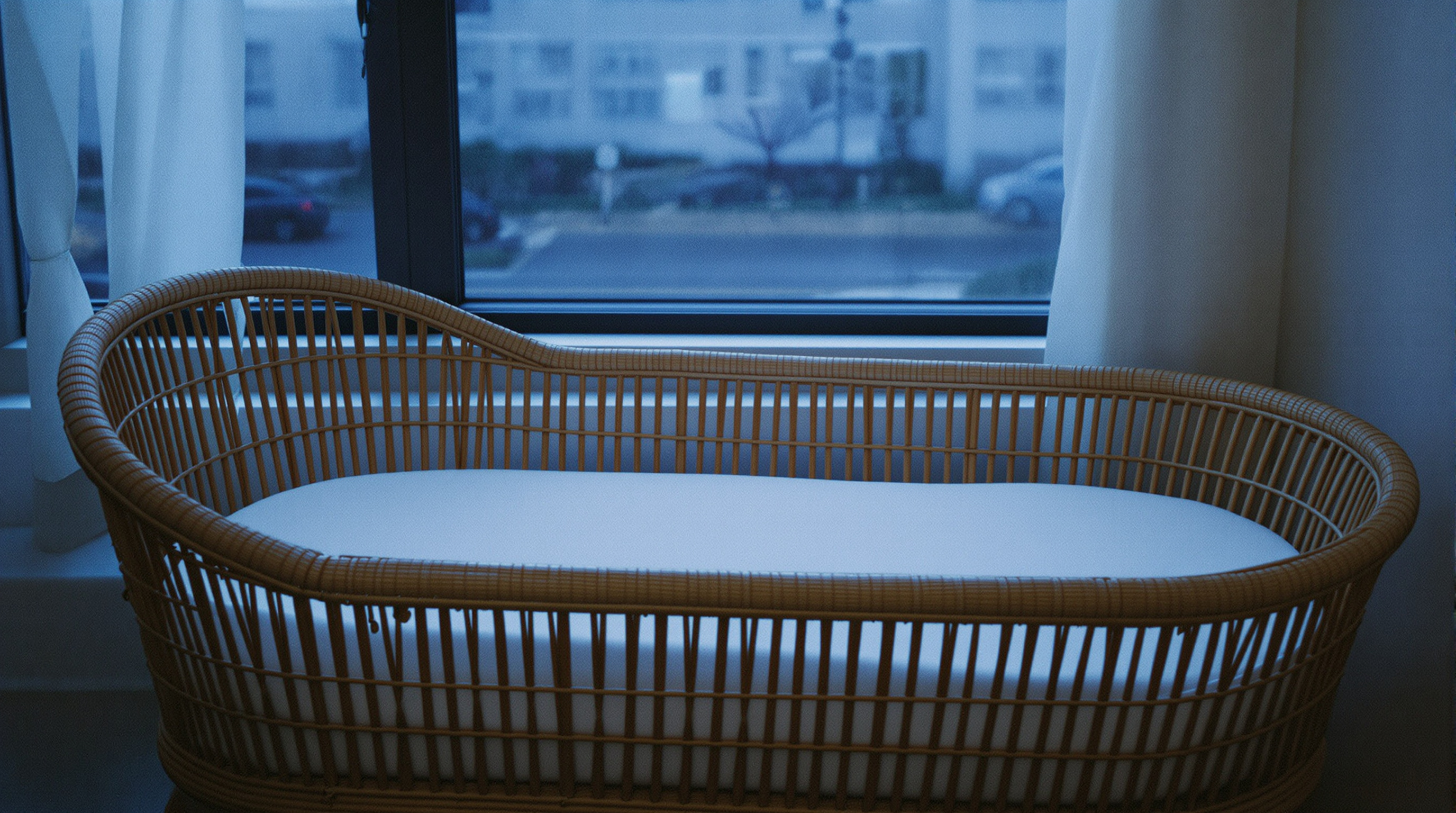
A crib, bassinet, or portable play yard with a firm mattress and a fitted sheet is what the Safe to Sleep campaign describes.
Source: NICHD Safe to Sleep (NIH) - Keep the crib bare. The AAP says to keep soft objects and loose bedding out of the sleep area — no pillows, quilts, blankets, bumper pads, or stuffed toys. A fitted sheet is all the bed needs. Source: American Academy of Pediatrics (HealthyChildren.org)
-
Share the room, not the bed. The AAP recommends baby sleep in your room, in their own crib or bassinet, for at least the first 6 months — and it does not recommend bed-sharing under any circumstances.
Room-sharing this way can lower the risk of SIDS by as much as 50 percent, per the AAP.
Source: American Academy of Pediatrics (HealthyChildren.org) - Skip inclined sleepers. The AAP says a sleep surface tilted more than 10 degrees is not safe for a sleeping baby. Source: American Academy of Pediatrics (HealthyChildren.org)
- Nothing weighted, ever. The AAP says not to use weighted blankets, weighted sleepers, weighted swaddles, or any other weighted objects on or near your sleeping baby. Source: American Academy of Pediatrics (HealthyChildren.org)
02How newborns actually sleep
- Newborns sleep a lot in total — between 14 and 17 hours a day — and stay awake only 1 to 3 hours at a time. Source: MedlinePlus (NIH)
- Those hours arrive in short pieces. The AAP notes newborns may sleep only 1 or 2 hours at a stretch, so broken nights are the norm, not a sign you're doing something wrong. Source: American Academy of Pediatrics (HealthyChildren.org)
- Days and nights start out mixed up. Newborns begin life on a round-the-clock feeding and sleep-wake cycle, with no built-in sense of nighttime yet. Source: MedlinePlus (NIH)
- It settles with time. The AAP notes babies do not develop regular sleep cycles until about 4 months of age — so the early chaos is temporary and expected. Source: American Academy of Pediatrics (HealthyChildren.org)
03Helping baby learn day from night
- Make daytime bright and lively. MedlinePlus suggests exposing your newborn to light and normal household noise during the day. Source: MedlinePlus (NIH)
- Make evenings dim and calm. As bedtime approaches, dim the lights, keep things quiet, and wind down the activity around your baby. Source: MedlinePlus (NIH)
- Fill daytime waking hours with connection. The AAP suggests keeping babies awake a little longer during the day and making daytime the time for talking, reading, and play. Source: American Academy of Pediatrics (HealthyChildren.org)
- Keep night feedings boring: lights low, voice soft, no playtime — feed, change if needed, and settle baby straight back to bed. Practical suggestion
04"Drowsy but awake" — and what's realistic now
- When it happens naturally, try laying your baby down sleepy but not yet asleep. MedlinePlus suggests this as a gentle way to help babies learn to settle where they sleep. Source: MedlinePlus (NIH)
-
Don't turn it into a test in the first weeks. The AAP's advice to put babies to bed drowsy rather than asleep is aimed at babies past about 4 months, once regular sleep cycles develop — so if your newborn conks out mid-feed, nothing has gone wrong.
Treat drowsy-but-awake as a bonus when it works, not a rule to enforce right now.
Source: American Academy of Pediatrics (HealthyChildren.org)
05Pacifiers at sleep time
-
The AAP says a pacifier may be offered at nap time and bedtime — it's linked to a lower risk of SIDS.
If you're breastfeeding, the AAP recommends waiting until breastfeeding is well established before starting the pacifier.
Source: American Academy of Pediatrics (HealthyChildren.org) - The NIH's Safe to Sleep campaign puts it simply: offer baby a pacifier for naps and at night once they are feeding well. Source: NICHD Safe to Sleep (NIH)
06Room temperature and overheating
- Dress baby in no more than one extra layer than you would comfortably wear in the same room, and skip hats indoors once you're home from the hospital. Source: American Academy of Pediatrics (HealthyChildren.org)
- Keep baby's head and face uncovered during sleep, and watch for signs of overheating like sweating and flushed skin. Source: NICHD Safe to Sleep (NIH)
From the gear guide
- Graco SnugRide SnugFit Infant Car Seat — our pick in infant car seats
- Bugaboo Butterfly 2 — our pick in travel strollers
- Maymom Wide-Mouth Collection Bottles — our pick in milk storage
- Philips Avent Soothie Pacifier — our pick in pacifiers