The journal · Pregnancy
Constipation During Pregnancy: Why It Happens, What Helps, and When to Call
In short
Constipation is one of the most common and least talked-about parts of pregnancy: Cleveland Clinic says about 1 in 5 women get constipated at some point. Pregnancy hormones slow your digestion, the iron in prenatal vitamins can make it worse, and later on your growing uterus presses on your bowel. Most of the fix is unglamorous: more water, more fiber, a daily walk, and not straining. Ask your provider before taking any laxative, stool softener, or fiber supplement, and call if you haven't had a bowel movement in three days, or if you have bleeding or severe pain.
Nobody puts it on the announcement card, but plenty of pregnant people spend a surprising amount of time thinking about their bowels. You feel bloated, you feel blocked, and the bathroom has become a place of quiet negotiation. If that's you, you're in very large company, and there's a real, physical reason it's happening.
Here's what the medical sources we checked actually say about constipation during pregnancy: why it happens, what helps, which remedies to run past your provider first, and the specific signs that mean it's time to call. No miracle teas, and nothing we couldn't trace back to a source.
01How common is constipation during pregnancy?
Very. According to Cleveland Clinic, "About 1 in 5 women gets constipated at some point during pregnancy." MedlinePlus, the National Library of Medicine's consumer health site, says plainly that having a harder time than usual moving your bowels is normal during pregnancy.
It can show up early. Cleveland Clinic says it can start "as early as the first or second month," though it's most likely in the third trimester. The March of Dimes likewise notes that constipation "is common later in pregnancy."
A quick definition, so you know what you're measuring: MedlinePlus describes constipation as "having fewer than three bowel movements a week." It also notes it's not important to have a bowel movement every day. What matters is a change from your own normal, and if your bowel habits change, that's worth mentioning to your provider.
02Why pregnancy slows everything down
There isn't one cause. There are usually three or four working together.
- Hormones. "The high levels of progesterone your body produces during pregnancy cause your bowel muscles to relax," Dr. Jhaveri explains in this Cleveland Clinic article. Relaxed muscles move things along more slowly, and the longer waste sits in the bowel, the more it dries out (Cleveland Clinic).
- Iron. The iron in prenatal vitamins and iron supplements is a well-known culprit. Cleveland Clinic lists it as a cause, and the March of Dimes puts it simply: "Too much iron can lead to constipation."
- Your growing uterus. Later in pregnancy, MedlinePlus says the pressure of the uterus on the rectum can make the problem worse. Cleveland Clinic adds that a heavier uterus puts more pressure on both the rectum and the bowel.
- Everyday habits. Cleveland Clinic notes that diet, how much you drink, and how much you move all play a role, and pregnancy has a way of disrupting all three at once.
03What actually helps
The good news: Cleveland Clinic says lifestyle changes usually bring relief, and the steps below are the same ones every source we checked recommends. None of them work overnight, and they work best together.
Constipation relief, in the order to try it
- Drink more water than feels necessary. MedlinePlus suggests "8 to 9 cups daily." Cleveland Clinic suggests eight to 12 cups. The sources don't agree on an exact number, so treat the low end as a floor, and ask your provider what's right for you.
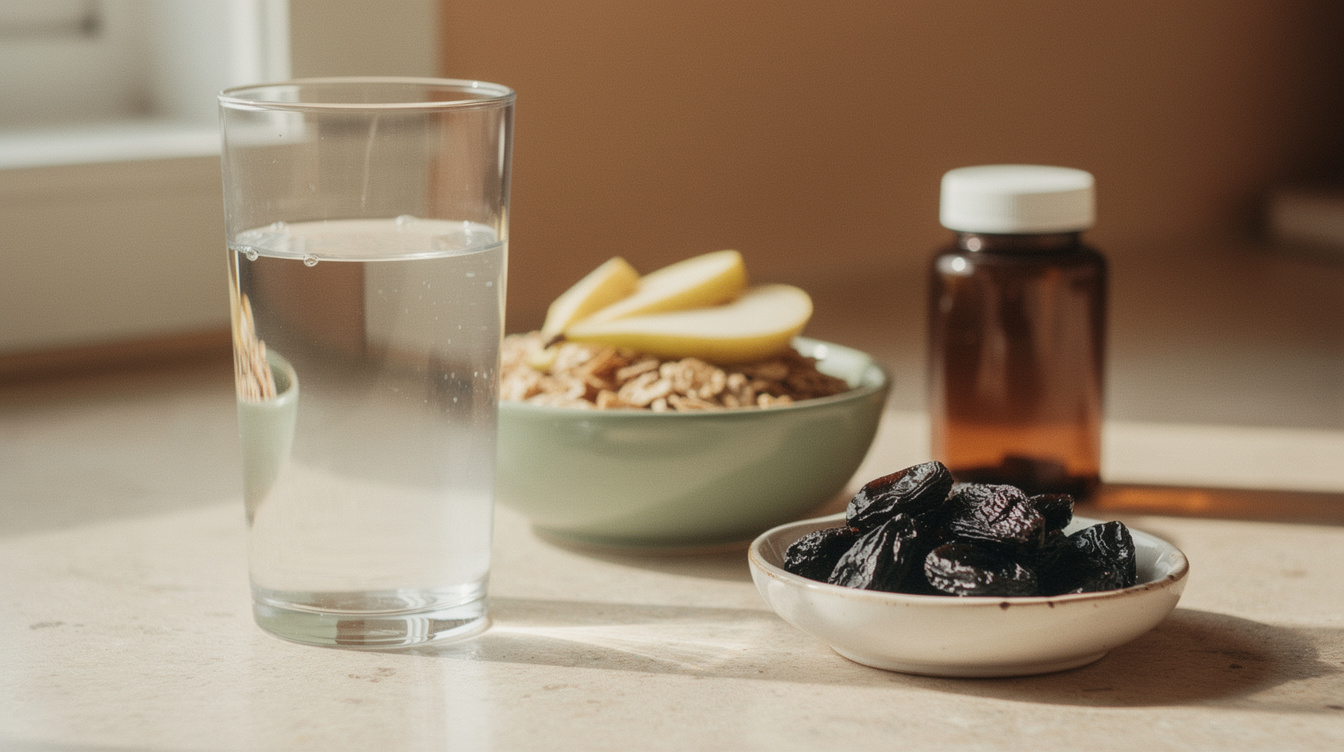
- Build up your fiber. Cleveland Clinic suggests 25 to 30 grams of fiber a day and gives useful reference points: a medium apple has about 4 grams, a cup of broccoli about 3, a slice of whole wheat bread about 2, and a cup of black beans about 15. MedlinePlus recommends raw fruits and vegetables, "such as prunes," plus whole grain or bran cereals.
- Try prune juice. The March of Dimes says "fruit juice (especially prune juice) can help, too."
- Move every day. The March of Dimes says to "do something active every day. Walking is good." Cleveland Clinic suggests 20 to 30 minutes of moderate exercise three times a week, such as walking, swimming, yoga, or light aerobics. Our guide to exercise during pregnancy covers what's safe as your pregnancy goes on.
- Eat smaller meals more often. The March of Dimes suggests eating smaller meals several times a day instead of three big ones.
- Don't strain. Pushing hard on the toilet can worsen hemorrhoids, per MedlinePlus. Give yourself time instead of force.
- Ask about your prenatal vitamin. If the iron seems to be the problem, Cleveland Clinic suggests asking your provider about a different prenatal vitamin with less iron. Don't just stop taking it on your own. Our prenatal vitamins guide explains why the iron is in there in the first place.
Fiber and water are a team
Both MedlinePlus and Cleveland Clinic list fluids and fiber side by side, and they belong together. As you add fiber, raise your water along with it. Adding fiber a little at a time also makes it easier to notice what's actually helping, instead of changing five things at once and guessing.
04Stool softeners, laxatives, and fiber supplements
This is where the sources get noticeably more careful, and we're going to follow them. Every one we checked says the same thing in some form: ask your provider before taking anything.
- MedlinePlus: "Ask your provider about trying a stool softener. Also ask before using laxatives during pregnancy."
- Cleveland Clinic: if lifestyle changes don't work, your provider "may prescribe a stool softener or a fiber supplement," and you should "always check with your provider before taking any laxatives or supplements." It also notes that some laxatives can dehydrate you.
- March of Dimes: ask your provider about "over-the counter medicine that is safe to take," and about fiber supplements and stool softeners.
One specific thing to skip: Cleveland Clinic says to avoid home remedies "like castor oil or mineral oil, unless your provider recommends you take them." You'll see both suggested online; neither belongs in your cabinet without a provider's okay.
You'll also find plenty of articles naming specific products as "pregnancy safe." We're deliberately not doing that here. The consumer health sources we were able to verify for this article don't name individual laxatives, and which one fits depends on your pregnancy and your history, which is exactly the conversation to have with your OB or midwife. It's a quick question at your next visit, or a phone call to the office before then.
05Constipation and hemorrhoids
These two travel together. "Constipation can cause hemorrhoids," according to Cleveland Clinic, and it can make hemorrhoids you already have "even more painful." Cleveland Clinic's main page on the topic lists hemorrhoids, small tears called anal fissures, and stool that becomes stuck (fecal impaction) as the complications to watch for.
The March of Dimes advice is practical: try not to push too hard when you go, soak in a warm tub, and ask your provider about fiber supplements and stool softeners. Keeping things moving without straining helps with both problems at once.
06Is it harming the baby?
This is often the first worry, so here's the direct answer from Cleveland Clinic: the pressure from constipation "won't affect the fetus." It also says constipation during pregnancy doesn't cause long-term complications, and that symptoms usually get better after you have your baby.
That last part comes with a footnote: the first bowel movements after birth are their own small adventure, especially after stitches or a C-section. Our guide to postpartum constipation covers that stretch, and it's worth reading before you pack your hospital bag.
07When to call your provider
Most pregnancy constipation is uncomfortable rather than dangerous. But a few situations are worth a call instead of another glass of prune juice.
- No bowel movement in three days. The March of Dimes says, "If you haven't had a bowel movement in 3 days, call your provider right away."
- Bleeding or severe pain. Also from the March of Dimes: with hemorrhoids, "If you have bleeding or severe pain, call your provider right away."
- It's been going on for weeks. Cleveland Clinic says to reach out if you've been constipated "for longer than a few weeks."
- Before any medicine or supplement. Including laxatives, stool softeners, fiber supplements, and herbal products, per every source above.
This is general information, not medical advice
Every pregnancy is different, and your OB, midwife, or family doctor knows your history in a way no article can. Belly pain, cramping, or bleeding during pregnancy can have causes that have nothing to do with constipation, so if something feels wrong or different, call them rather than assuming. That's exactly what they're there for.
08One small, unglamorous habit at a time
Constipation is one of those pregnancy symptoms that gets better with boring consistency: a water bottle you actually refill, a piece of fruit with lunch, a walk after dinner. Small things, done most days. If you like having a plan for the rest of pregnancy too, our free week-by-week planner turns your due date into a personalized to-do list, so the bigger prep gets done early and the last weeks stay light.
Questions parents actually ask
Is it normal to be constipated while pregnant?
Yes. Cleveland Clinic says about 1 in 5 women get constipated at some point during pregnancy, and MedlinePlus says having a harder time than usual moving your bowels is normal in pregnancy. Pregnancy hormones slow digestion, iron in prenatal vitamins can add to it, and later on the uterus presses on the rectum.
When does constipation start in pregnancy?
It can start early. Cleveland Clinic says it can begin as early as the first or second month, though it's most likely in the third trimester. The March of Dimes notes it's common later in pregnancy, when the growing uterus adds pressure on the bowel.
What helps constipation during pregnancy fast?
There's no instant fix, but the steps every source recommends are drinking more water (MedlinePlus suggests 8 to 9 cups a day), eating more fiber, daily activity like walking, and prune juice, which the March of Dimes specifically mentions. If those aren't enough, ask your provider about a stool softener or fiber supplement before taking one.
Can I take a laxative while pregnant?
Only after checking with your provider. MedlinePlus says to ask before using laxatives during pregnancy, and Cleveland Clinic says to always check with your provider before taking any laxatives or supplements, noting some can dehydrate you. Cleveland Clinic also advises avoiding castor oil and mineral oil unless your provider recommends them.
Can straining from constipation hurt the baby?
According to Cleveland Clinic, the pressure from constipation won't affect the fetus, and constipation in pregnancy doesn't cause long-term complications. Straining can cause problems for you, though, including hemorrhoids and small anal tears, so it's worth avoiding pushing hard.
When should I call my doctor about pregnancy constipation?
The March of Dimes says to call your provider right away if you haven't had a bowel movement in 3 days, or if you have bleeding or severe pain. Cleveland Clinic says to reach out if you've been constipated for longer than a few weeks. Call before taking any laxative or supplement, too.
Sources
- Cleveland Clinic — Pregnancy Constipation: Pain, Causes, Treatments & Relief — About 1 in 5 women get constipated during pregnancy; can start in the first or second month, most likely in the third trimester; progesterone, iron, uterine pressure, and lifestyle as causes; 25-30 grams of fiber a day with food examples; 8-12 cups of water; 20-30 minutes of moderate exercise three times a week; ask about a prenatal vitamin with less iron; check with a provider before laxatives or supplements; avoid castor oil and mineral oil unless recommended; complications include hemorrhoids, anal fissures, and fecal impaction; won't affect the fetus; call if constipated longer than a few weeks; usually improves after birth.
- Cleveland Clinic — Pregnancy Constipation: Why It Happens and How To Find Relief — High progesterone relaxes the bowel muscles; iron and other vitamins can contribute; the expanding uterus adds pressure on the rectum and bowels; constipation can cause hemorrhoids and make existing ones more painful.
- MedlinePlus (National Library of Medicine) — Common symptoms during pregnancy — Harder bowel movements are normal in pregnancy because hormones slow digestion; uterine pressure on the rectum later in pregnancy; 8 to 9 cups of water daily; raw fruits and vegetables such as prunes, whole grain or bran cereals; ask your provider about a stool softener and before using laxatives; straining can worsen hemorrhoids.
- March of Dimes — Common discomforts of pregnancy — Constipation is common later in pregnancy; caused by hormones and the weight of the uterus; too much iron can lead to constipation; drink water, eat high-fiber foods, prune juice can help; be active every day; eat smaller meals; ask about safe over-the-counter medicine, fiber supplements, and stool softeners; call right away if no bowel movement in 3 days or if bleeding or severe pain with hemorrhoids.
- MedlinePlus (National Library of Medicine) — Constipation — Constipation defined as fewer than three bowel movements a week; it's not important to have a bowel movement every day, but check with your provider if your bowel habits change; use laxatives only if your provider says you should.
Newborn Weeks is planning help, not medical advice — always follow your own doctor, midwife, or pediatrician.
From the gear guide
- Hauck Sport Travel Stroller — our pick in travel strollers
- Mompush Wiz 2-in-1 Stroller — our pick in travel strollers
- Momcozy Detergent Tablets — our pick in sterilizers & drying racks
- Owl Green 4-in-1 Baby Nail Kit — our pick in nail care & grooming
Keep reading
 Pregnancy · 12 min read
Stretch Marks During Pregnancy: What Causes Them, What Actually Helps, and What's Safe
Stretch marks during pregnancy affect 50-90% of women. What causes them, why creams don't prevent them, what helps, and what to avoid while pregnant.
Read the article Pregnancy · 11 min read
Dental Care During Pregnancy: Is the Dentist Safe, and What Changes in Your Mouth
Dental care during pregnancy is safe at any stage, per the CDC. What happens to your gums, X-rays and numbing, morning sickness, and when to call the dentist.
Read the article Pregnancy · 10 min read
Headaches During Pregnancy: What Helps, What's Safe to Take, and When to Call
Headaches during pregnancy are common and usually harmless. What helps, what medicine experts say is safe, and the warning signs that mean call right away.
Read the article