The journal · Pregnancy
Prenatal Vitamins: The Numbers That Actually Matter on the Label
In short
A prenatal vitamin exists to cover the few nutrients that are hard to get from food alone in pregnancy — above all folic acid. The CDC says anyone who could become pregnant should get 400 mcg of folic acid a day, starting at least a month before conceiving, because the birth defects it prevents happen in the first few weeks. MedlinePlus puts the need at 600 mcg a day once you are pregnant, plus 27 mg of iron and 1,000 mg of calcium. Vitamin A is the one ingredient to watch, since the preformed kind builds up in the body. And the AAP's advice is worth repeating: take vitamins only in the doses your own doctor recommends.
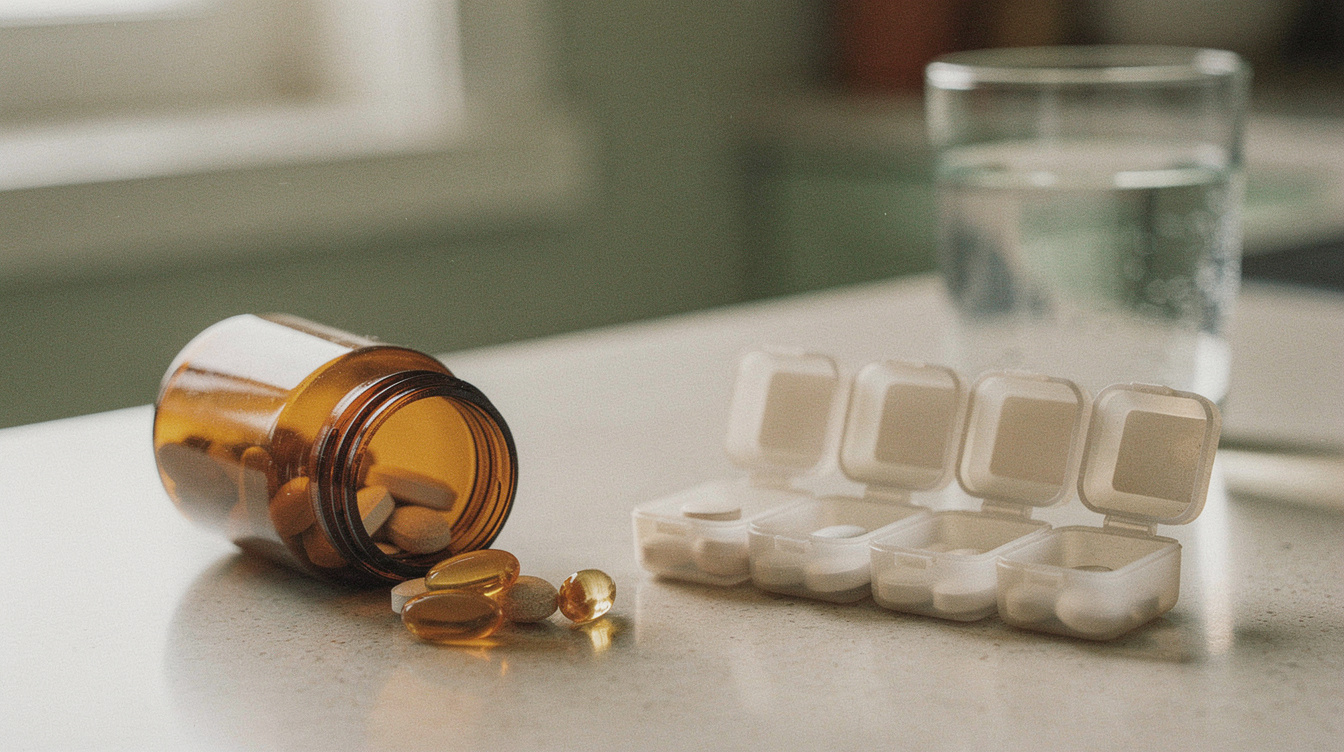
There is a whole aisle of these. Forty bottles, every one of them promising the same thing in a slightly different font, at prices that range from eight dollars to sixty. Gummies, softgels, horse-pill tablets, a three-a-day packet. Nothing on the shelf tells you which of those numbers on the back actually matters.
The short version: a prenatal vitamin is not a multivitamin with a nicer label. It exists to cover a handful of nutrients that are genuinely hard to get enough of from food during pregnancy — and one of them, folic acid, has to be on board before you even know you are pregnant. Here is what the CDC, the American Academy of Pediatrics, MedlinePlus and Cleveland Clinic actually say, with the specific amounts, and with the one ingredient you can take too much of.
01What a prenatal vitamin is actually for
It is a gap-filler, not a meal replacement. The clearest statement of the problem it solves comes from MedlinePlus, the National Library of Medicine's consumer health service, on folic acid: "During pregnancy and when breastfeeding, you need 600 mcg per day from foods and/or vitamins. It is hard to get this amount from foods alone, so you will most likely need to take a supplement that contains folic acid."
The AAP frames the rest of it the same way: your obstetrician may recommend a daily prenatal pill that includes "iron, calcium, and other minerals, and the fatty acids docosahexaenoic acid (DHA) and arachidonic acid (ARA)." DHA, it notes, "accumulates in the brain and eyes of the fetus, especially during the last trimester."
And the sentence that should sit underneath this entire article, also from the AAP: "Follow your obstetrician's advice regarding your use of prenatal vitamins. You should take vitamins only in the doses recommended by your doctor."
02Folic acid is the one with the strongest evidence
If you only get one thing right, this is it. The CDC recommendation is blunt and it is not limited to people who are already pregnant: "All women capable of becoming pregnant should get 400 micrograms (mcg) of folic acid daily."
The reason is timing. Folic acid helps prevent neural tube defects — which the CDC describes as "major birth defects of a baby's brain (such as anencephaly) and spine (such as spina bifida)." And those defects form early: "NTDs happen in the first few weeks of pregnancy, often before you know you are pregnant." Which is why the CDC's advice is to get ahead of it — "If you're thinking about becoming pregnant, start taking folic acid at least 1 month before conception."
One detail almost nobody mentions on the shelf, from the CDC's page on sources and intake: the form matters. "Folic acid is a type of folate (vitamin B9) that is more stable to heat and light than food folate," and — this is the part worth remembering — "folic acid is the only type of folate shown to help prevent NTDs." Leafy greens, beans and oranges are still worth eating, and the CDC says to eat them. But the 400 mcg target is specifically folic acid, and labels list "folate content in mcg dietary folate equivalent (DFE) and mcg folic acid per serving," so the number to find on the back of the bottle is the folic acid one.
There is also a much higher dose for a specific situation. Both the CDC and the AAP's formal position statement describe 4,000 mcg a day for people at elevated risk of a neural-tube-defect pregnancy, beginning one month before conceiving and continuing through the first trimester. The AAP adds an important caution: do not try to reach that dose by taking extra multivitamins — that is a conversation with your doctor, who prescribes it properly.
03The numbers worth checking on the back of the bottle
There is no single legally required prenatal formula, which is exactly why two bottles side by side can contain different things. These are the daily targets our sources name — some from food, some from the pill, and your provider is the one who tells you which is which for you.
What the guidance actually specifies
- Folic acid: 400 mcg minimum. CDC: 400 mcg daily for anyone who could become pregnant. Cleveland Clinic puts the pregnancy range at "400 to 600 micrograms (mcg) of folic acid per day," and MedlinePlus puts the total daily need in pregnancy at 600 mcg from foods and/or vitamins.
- Iron: 27 mg a day. Both MedlinePlus and Cleveland Clinic give the same figure — "at least 27 milligrams (mg) per day" — and MedlinePlus ties it to fetal growth and brain development.
- Calcium: 1,000 mg a day. MedlinePlus: 1,000 mg a day for pregnant adults, and "1,300 mg of calcium a day" for pregnant teenagers. Cleveland Clinic gives the same 1,000 mg floor for anyone over 19.
- Vitamin D: at least 600 international units. Cleveland Clinic's stated minimum.
- DHA: at least 200 mg. Cleveland Clinic recommends "at least 200 mg of DHA during pregnancy" — the omega-3 the AAP describes accumulating in the fetal brain and eyes late in pregnancy.
- Iodine and choline should be on the list. Cleveland Clinic names iodine and choline among the nutrients a prenatal should include. We did not find a specific daily number for either in the sources we could verify for this piece, so we are not going to put one here.
Cleveland Clinic's advice on picking between products is refreshingly unglamorous: "Ask your pregnancy care provider if they recommend one over others. Make sure to check the list of nutrients to ensure all the essential vitamins listed above are included." In other words, the label is the spec sheet, and your provider is the tiebreaker. Price, packaging and the word "complete" on the front are not.
04When to start, and how long to keep going
Earlier than most people expect. Cleveland Clinic says "you should take prenatal vitamins one to three months before trying to conceive" — and if the pregnancy was a surprise, "as soon as you know you're pregnant." The CDC's one-month-before-conception line points the same direction.
If you are reading this already pregnant and having just realized you were not taking anything, that is an extremely common place to be and not a reason to spiral. Start now and tell your provider at your next appointment. If you are at the very beginning, our first trimester checklist covers what else belongs in these weeks, in the order it actually matters.
On the other end: MedlinePlus's 600 mcg folic acid target covers "during pregnancy and when breastfeeding," so the need does not switch off the day the baby arrives. None of the pages we verified for this article names a specific stop date, so we are not going to invent one — ask your own provider how long they want you on it after birth.
05Vitamin A: the one you can genuinely overdo
Most of the nutrients above are things people fall short on. Vitamin A runs the other way, and it is the reason "more vitamins" is not automatically safer.
The MotherToBaby fact sheet on vitamin A gives the daily recommendation in pregnancy at 19 or older as 770 mcg RAE — about 2,566 IU — with an upper limit of 3,000 mcg. The problem is a storage problem: "Preformed vitamin A can quickly build up in the body to toxic (harmful) amounts if too much is taken. Provitamin A from beta carotene does not result in vitamin A buildup, because the body controls the rate." Preformed vitamin A is the animal-source kind that is "ready for the body to use right away"; beta-carotene is the plant form your body converts only as needed.
Add up every bottle, not just the prenatal
MotherToBaby says to avoid doses above 10,000 IU of vitamin A per day "unless otherwise directed by your healthcare provider," and notes that taking more than 20,000 IU per day, especially of preformed vitamin A, "has been linked in some studies to an increased chance of birth defects." Its practical instruction is to review all of your supplements with your provider and compare the total amount of vitamin A against the recommendation — because a prenatal plus a separate multivitamin plus a skin or hair supplement can stack without anyone noticing. The AAP says the same thing in one line: "Make sure your doctor knows about any other supplements you may be taking, including herbal remedies."
06Is extra folic acid a problem? Here is what the research says
This question comes up constantly, usually in the form of a worried forum post, so it is worth answering with the actual evidence. The CDC's page on folic acid safety states plainly that "taking 400 mcg of folic acid per day has not been shown to cause harm."
On the specific worries you will see repeated online: the CDC says "no confirmed health risks have been found" in connection with unmetabolized folic acid in the blood, most of which is passed in urine. On vitamin B12, it says folic acid fortification "did not make it more likely for people to have undetected vitamin B12 deficiency." And on cancer, it reports an analysis of 13 randomized trials covering roughly 50,000 people that found "no increase or decrease in cancer cases among those taking folic acid."
That is reassurance about the recommended dose, not a license to double up. The CDC's own framing of supplements is the line to keep: "more is not better."
07If the pill makes you queasy or stopped up
Two side effects send more prenatal vitamins to the back of the cabinet than anything else, and both have ordinary fixes. Cleveland Clinic's suggestion for nausea: "Taking your vitamin after a meal can sometimes help." For constipation — a very common companion to iron — "eating foods with more fiber and increasing how much water you drink may help," and "you may need a stool softener," which is worth asking your provider about rather than guessing at in the pharmacy aisle.
If the nausea is bigger than the pill, that is a different conversation, and our guide to morning sickness covers what the guidance says about when queasiness stops being routine. The thing not to do is quietly stop taking it and say nothing at your next appointment — there are other formats and other schedules, and your provider can only offer them if they know.
08What a prenatal vitamin does not do
It does not make the rest of the plate irrelevant. MedlinePlus pairs its nutrient targets with the other half of pregnancy eating: avoid alcohol, high-mercury fish, undercooked foods, unpasteurized dairy and raw sprouts, and limit "caffeine to less than 200 mg per day during pregnancy." Our guide to foods to avoid during pregnancy goes through those one at a time with the sourcing attached.
It also does not carry over automatically to the baby. Breastfed and partially breastfed infants have their own separate vitamin D requirement from the AAP, which is a different product and a different dose — we cover it in vitamin D drops for babies.
This is general information, not medical advice
Doses, brands and whether you need anything beyond a standard prenatal depend on your own health history, your bloodwork and your pregnancy — which is why every source above routes the decision back to your obstetrician or midwife. Bring the bottle you are taking, or a photo of its label, to your next appointment and let them check the numbers against you specifically. Do not start a high-dose supplement on your own.
09One small decision, made once
The good news about this particular task is that it is a one-time decision followed by a habit. Pick a product whose label carries the amounts above, confirm it with your provider, put it next to something you already do every day, and it stops being a thing you think about. That is how most of pregnancy prep should work, and it is exactly what our free week-by-week planner is built to do — put each small task where it belongs so none of them pile up in the last month.
Questions parents actually ask
When should I start taking prenatal vitamins?
Before you conceive, if you can. Cleveland Clinic recommends starting one to three months before trying to conceive, and the CDC says to start folic acid at least one month before conception — because neural tube defects happen in the first few weeks of pregnancy, often before you know you are pregnant. If the pregnancy was unplanned, Cleveland Clinic's advice is to start as soon as you know.
How much folic acid do I need — 400 mcg or 600 mcg?
Both numbers are real and they answer different questions. The CDC's 400 mcg a day is the baseline for anyone capable of becoming pregnant, from a supplement. MedlinePlus puts the total daily need at 600 mcg once you are pregnant or breastfeeding, counting foods and vitamins together. Cleveland Clinic gives the pregnancy range as 400 to 600 mcg per day. A higher 4,000 mcg dose exists for people at elevated risk of a neural-tube-defect pregnancy, but the AAP is clear that is a prescription conversation with your doctor, not something to assemble out of extra multivitamins.
What amounts should a prenatal vitamin actually contain?
The figures our sources name are 400 to 600 mcg of folic acid, at least 27 mg of iron, 1,000 mg of calcium a day for adults (1,300 mg for pregnant teenagers), at least 600 international units of vitamin D, and at least 200 mg of DHA. Cleveland Clinic also lists iodine and choline among the nutrients a prenatal should include. There is no single standard formula across brands, so the nutrient list on the back is the thing to compare — and Cleveland Clinic suggests asking your provider whether they recommend one product over another.
Can you take too much of a prenatal vitamin?
Yes, and vitamin A is the clearest reason. MotherToBaby gives the pregnancy recommendation as 770 mcg RAE (about 2,566 IU) with an upper limit of 3,000 mcg, and warns that preformed vitamin A can build up in the body to harmful amounts. It advises avoiding doses above 10,000 IU a day unless your provider directs it, and notes that more than 20,000 IU a day has been linked in some studies to an increased chance of birth defects. Beta-carotene does not build up the same way. The practical step is to add up every supplement you take, not just the prenatal.
Is extra folic acid harmful?
At the recommended amount, the CDC says taking 400 mcg of folic acid a day has not been shown to cause harm. It also reports no confirmed health risks tied to unmetabolized folic acid in the blood, no increase in undetected vitamin B12 deficiency from fortification, and no change in cancer rates across an analysis of 13 randomized trials covering roughly 50,000 people. That is not an argument for doubling up — the CDC's own line on supplements is that more is not better.
Can I just eat well instead of taking a prenatal vitamin?
Food matters, but MedlinePlus says the 600 mcg folic acid target is hard to reach from foods alone, so most people will need a supplement containing folic acid. The CDC adds a reason diet alone cannot substitute: folic acid is the only form of folate shown to help prevent neural tube defects. Eating folate-rich foods like leafy greens, beans and oranges is still recommended alongside it.
Do I keep taking it after the baby is born?
MedlinePlus's 600 mcg daily folic acid target applies during pregnancy and while breastfeeding, so the need does not end at delivery. None of the pages we verified for this article names a specific stop date, so ask your own provider how long they want you taking it postpartum.
Sources
- CDC — About Folic Acid — All women capable of becoming pregnant should get 400 mcg of folic acid daily; start at least 1 month before conception; neural tube defects are major birth defects of the brain (anencephaly) and spine (spina bifida); NTDs happen in the first few weeks of pregnancy, often before you know you are pregnant; 4,000 mcg a day for a prior NTD-affected pregnancy, starting 1 month before conceiving and through the first 3 months.
- CDC — Folic Acid: Sources and Recommended Intake — A daily vitamin with 400 mcg of folic acid helps ensure enough to prevent NTDs; folic acid is a type of folate that is more stable to heat and light than food folate; folic acid is the only type of folate shown to help prevent NTDs; eat folate-rich foods such as leafy greens, beans and oranges; labels show folate in mcg DFE and mcg folic acid per serving; fortified foods include some flours, breads, pastas, rice and cereals.
- MedlinePlus (National Library of Medicine) — Pregnancy and Nutrition — 600 mcg of folic acid per day from foods and/or vitamins during pregnancy and breastfeeding, and that it is hard to get from foods alone so a supplement is likely needed; 27 mg of iron a day, tied to fetal growth and brain development; 1,000 mg of calcium a day for pregnant adults and 1,300 mg for pregnant teenagers; take only vitamins and mineral supplements your provider recommends; avoid alcohol, high-mercury fish, undercooked foods, unpasteurized dairy and raw sprouts, and limit caffeine to under 200 mg per day.
- HealthyChildren.org (AAP) — Nutrition and Exercise During Pregnancy — Follow your obstetrician's advice on prenatal vitamins and take vitamins only in the doses recommended by your doctor; generally 400 mcg a day of folic acid; a recommended prenatal includes iron, calcium and other minerals plus DHA and ARA; DHA accumulates in the fetal brain and eyes especially in the last trimester; make sure your doctor knows about any other supplements including herbal remedies.
- Cleveland Clinic — Prenatal Vitamins — Essential nutrients list including folic acid, iron, calcium, vitamin D, DHA and iodine, plus choline and B vitamins; 400 to 600 mcg folic acid per day; at least 27 mg iron per day; at least 1,000 mg calcium per day over age 19; at least 600 IU vitamin D; at least 200 mg DHA; start one to three months before trying to conceive, or as soon as you know you are pregnant; take the vitamin after a meal to help nausea; more fiber and water, or a stool softener, for constipation; ask your provider if they recommend one product over others and check the nutrient list.
- MotherToBaby (OTIS) — Vitamin A Fact Sheet — Pregnancy recommendation at age 19+ of 770 mcg RAE (2,566 IU) with an upper limit of 3,000 mcg; preformed vitamin A can build up in the body to toxic amounts while provitamin A from beta-carotene does not because the body controls the conversion rate; avoid doses above 10,000 IU per day unless directed by a provider; more than 20,000 IU per day, especially preformed, has been linked in some studies to an increased chance of birth defects; review all supplements with your provider and compare total vitamin A against the recommendation.
Newborn Weeks is planning help, not medical advice — always follow your own doctor, midwife, or pediatrician.
From the gear guide
- Munchkin Sparrow Travel Stroller — our pick in travel strollers
- Compact Travel Stroller with Canopy — our pick in travel strollers
- Portable Changing Pad with Built-in Pillow — our pick in diaper bags & changing pads
- Gerber Flannel Receiving Blankets — our pick in swaddle & receiving blankets
Keep reading
 Pregnancy · 11 min read
Exercise During Pregnancy: How Much, How Hard, and When to Stop
Exercise during pregnancy is safe for most people: 150 minutes a week, the talk test, what to skip, and the warning signs that mean stop right now.
Read the article Pregnancy · 11 min read
Foods to Avoid During Pregnancy: The Honest, Source-Cited List
The real foods to avoid during pregnancy, straight from the FDA and CDC — which fish, cheeses, and deli meats, and what's fine once it's heated.
Read the article Newborn basics · 14 min read
Newborn Constipation: What's Normal, What Isn't, and What Actually Helps
Newborn constipation is less common than it looks. What's normal, the straining that isn't constipation, and when to call your pediatrician.
Read the article