The journal · Feeding
Foods to Avoid While Breastfeeding: The Short, Honest List
In short
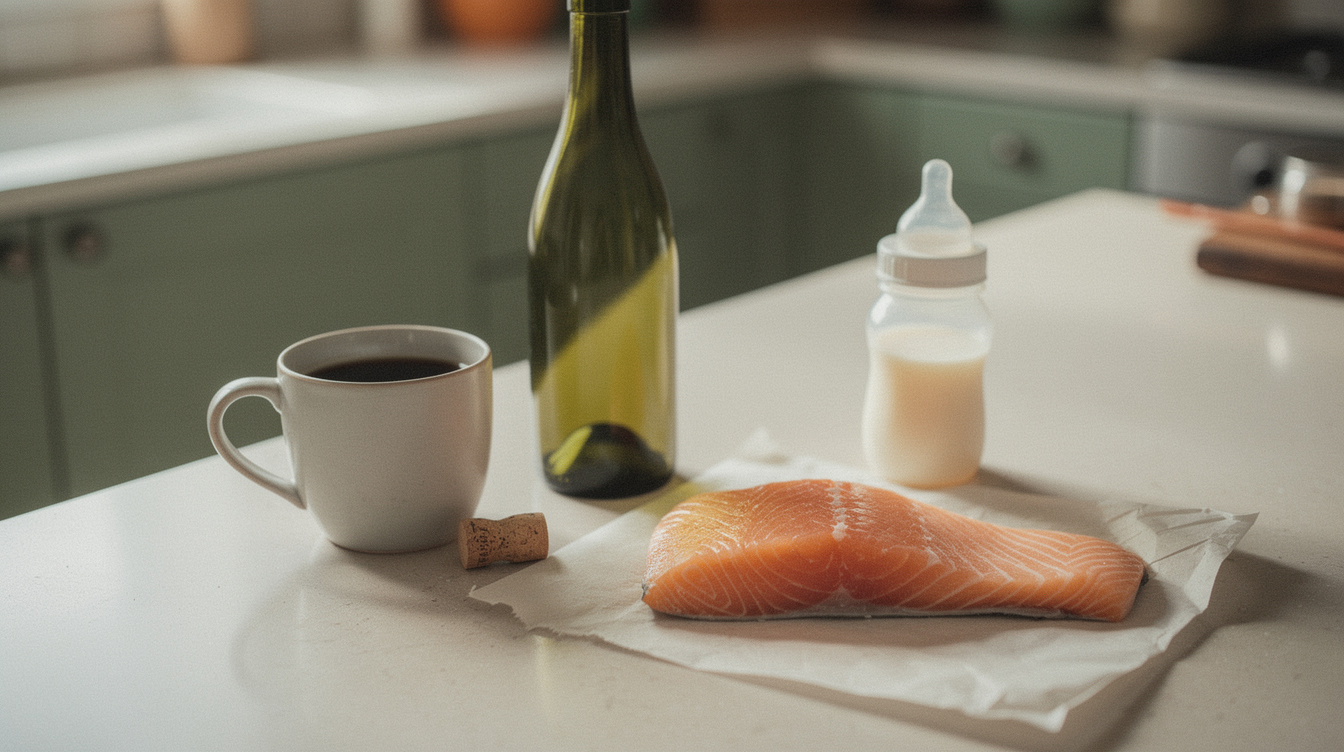
The list of foods to avoid while breastfeeding is much shorter than the internet suggests. The CDC's position is that women generally do not need to limit or avoid specific foods while breastfeeding. There is one real avoid list — a handful of high-mercury fish named by the FDA — plus sensible limits on caffeine (about 300 mg, or 2 to 3 cups of coffee, a day) and alcohol (one drink, then wait about two hours). Spicy food, garlic, and cabbage are not banned. And if you eat no animal products at all, the one thing you do need is a vitamin B12 supplement — ask your provider.
Search for foods to avoid while breastfeeding and you will find lists of seventeen things, then twenty-five, then a comment thread where somebody gave up broccoli for four months. It is a strange feature of new parenthood: the moment you are the most tired and the most hungry you have ever been, the internet hands you a diet.
Here is what the actual public health guidance says, with every claim linked to the page it came from. The honest version is short, and most of it is good news — you can keep eating what you eat. There is one real avoid list, two things worth limiting, and one situation where you genuinely do need to add something.
This is general information, not medical advice
Every parent and every baby is different. Anything here about diet, supplements, caffeine, alcohol, or a baby's reaction to a food is worth running past your own pediatrician, OB, midwife, or a lactation consultant — they know your history and your baby. If your baby has a rash, blood in their stool, or trouble breathing, that is a call to your pediatrician, not a question for a search engine.
01The short answer, from the CDC
Start with the sentence that undercuts most of the advice you will read elsewhere. From the CDC's maternal diet guidance: "Generally, women do not need to limit or avoid specific foods while breastfeeding." The recommendation that follows is not a restriction at all — "Mothers should be encouraged to eat a healthy and diverse diet."
MedlinePlus, the National Library of Medicine's patient-information service, puts it even more plainly: "You can safely eat any foods you like. Some foods may flavor your breast milk, but babies are often not bothered by this."
That is the baseline. Everything below is an exception to it, not a replacement for it.
02The one real avoid list: four high-mercury fish
This is the only category where the guidance says avoid rather than limit. Mercury builds up in certain large, long-lived fish, and it passes into breast milk. The FDA and EPA's advice about eating fish sorts dozens of fish into three groups, and names the ones to skip while pregnant or breastfeeding.
- Choices to avoid (the highest-mercury fish): "King mackerel, Marlin, Orange roughy, Shark, Swordfish, Tilefish (Gulf of Mexico), Tuna, bigeye."
- Best choices — eat these freely within the serving guidance. The FDA's examples include "Anchovy, Atlantic mackerel, Catfish, Clam, Crab, Salmon, Sardine, Shrimp, Tilapia, Trout."
- How much: the FDA advises that those who are pregnant or breastfeeding "consume between 8 and 12 ounces per week of a variety" of lower-mercury fish, where "1 serving is 4 ounces."
Note what this advice is not telling you to do. It is not telling you to give up fish. The whole point of the chart is that fish is worth eating — the CDC's guidance echoes it, telling breastfeeding women to "eat a variety of fish from the 'Best Choices' and 'Good Choices' categories." The instruction is to pick different fish, not less fish.
One practical note on canned tuna, since it is the question everyone has: the fish on the avoid list is bigeye tuna, the kind sold as steaks and sashimi. Canned light tuna sits in the FDA's best-choices group and albacore in the middle group, so the label matters.
03Caffeine: there is a real limit, and it is higher than you think
You do not have to give up coffee. The CDC defines a low-to-moderate amount as "about 300 milligrams or less per day, which is about 2 to 3 cups of coffee."
Worth knowing: the advice is not perfectly uniform across sources. MedlinePlus is more conservative, saying to "limit your caffeine intake" and "keep your coffee or tea at 1 cup (240 milliliters) per day." We are not going to pretend those two numbers are the same number. The CDC's 300 mg figure is the one aimed at the general breastfeeding population; if your baby seems wired, unsettled, or hard to settle for sleep, the lower end is the sensible place to land, and your pediatrician can help you decide.
It is also worth being honest about the direction of the blame here. Newborns fight sleep for a long list of reasons that have nothing to do with your coffee, and most unsettled evenings are ordinary newborn behavior rather than something you ate. Cutting your caffeine to zero and getting the same evening is a common and demoralizing experiment.
04Alcohol: the timing matters more than the rule
The CDC's guidance on alcohol and breastfeeding opens where you would expect: "Not drinking alcohol is the safest option for breastfeeding mothers." It then gives real, usable numbers rather than leaving you to guess, which is why it is worth reading rather than summarizing from memory.
- Moderate drinking is not known to harm the baby. The CDC notes that up to one standard drink per day is not known to be harmful to a nursing infant.
- A standard drink is a specific thing — 14 grams of pure alcohol, which the CDC lists as 12 ounces of 5% beer, 8 ounces of 7% malt liquor, 5 ounces of 12% wine, or 1.5 ounces of 40% distilled spirits. A generous pour at home is often two of these.
- Wait about two hours after a single drink before nursing, so the alcohol level in your milk has time to fall.
- More than a drink a day is where problems start. The CDC says heavier drinking can interfere with milk production over time, affect a baby's development, growth, and sleep, and impair your own judgment and ability to care for your baby safely.
Pumping and dumping does not sober up your milk
This is the single most common misunderstanding about alcohol and nursing, and the CDC states it directly: "Expressing or pumping then discarding milk after drinking alcohol does not reduce the amount of alcohol in the mother's milk more quickly." Alcohol leaves your milk as it leaves your blood — on its own schedule, not the pump's. Pumping is useful for comfort, or to keep to your pumping routine, or to set aside a bottle for later. It is not a reset button. Time is the only thing that works. If you want milk banked for an evening out, express it before you drink, and store it the way our breast milk storage guide describes.
05Spicy food, garlic, cabbage: not banned
This is the folklore that costs parents the most food for the least reason. The AAP does acknowledge the effect is sometimes real: "Some babies cry, fuss, or even nurse more often after their mother has eaten spicy or 'gassy' foods (such as cabbage)."
But read the next sentence, because it is the one that matters: "These reactions differ from allergies in that they cause less-serious symptoms (no rashes or abnormal breathing) and almost always last less than twenty-four hours." A fussy evening after chili is a fussy evening, not a diagnosis, and not a reason to delete a food group for a year.
The sane way to handle it is the one MedlinePlus describes: "If your baby is fussy after you eat a certain food or spice, avoid that food for a while. Try it again later to see if it is a problem." Test it, re-test it, and keep the food if it turns out to be innocent. Most of them are — and if the fussiness follows no pattern at all, the cause is almost certainly not dinner.
06When a baby really is reacting to something you ate
True food allergy through breast milk happens, it is just much rarer than the internet implies — and it looks different from an unsettled evening. The AAP names cow's milk in the nursing parent's diet as the most common culprit, and describes the signs this way: the infant "may show signs of severe colic, abdominal discomfort, or a skin rash such as eczema or hives, or may react with vomiting, severe diarrhea (often with blood in the stool), or difficulty breathing."
Call your pediatrician — don't experiment — if you see
- Blood in your baby's stool, or severe diarrhea
- Hives, or eczema that keeps spreading
- Repeated vomiting, which is different from the ordinary small spit-ups most newborns do after feeds
- Any difficulty breathing — this is an emergency, not a phone call to make tomorrow
- Severe, inconsolable colic that does not fit the usual evening pattern
Two things the AAP adds that are worth holding onto. First, cutting foods out preventively does not work: "There is no evidence that avoiding certain foods while breastfeeding can help prevent your child from developing allergies or asthma." Second, there is one narrow exception for family history — if severe food allergies run in your family, the AAP says "you might consider limiting your intake of milk and dairy products, fish, eggs, peanuts, and other nuts." That is a conversation to have with your pediatrician about your specific family, not a list to adopt because you read it here.
07The one thing you may need to add
Almost all of this article is about what you do not have to give up. Here is the exception, and it points the other way — toward something to add.
If you eat no animal products at all, vitamin B12 is a real concern for your baby, not a theoretical one. The CDC states that "infants who receive only breast milk from mothers who do not consume animal products are at greater risk for developing vitamin B12 deficiency shortly after birth," and is unusually blunt about the stakes: "If left untreated, vitamin B12 deficiency in infants can lead to permanent brain damage." The fix is simple and the CDC names it — breastfeeding parents on a strict vegetarian or vegan diet "should ask their health care provider about taking a supplement that contains the appropriate amount of vitamin B12."
If that describes you, make it the next thing you mention at an appointment. It is a one-minute conversation with a genuinely large payoff.
08What to actually eat
Making milk takes fuel. The CDC says "an additional 330 to 400 kilocalories (kcal) per day is recommended for well-nourished, breastfeeding mothers" — roughly a real snack and a bit, every day, on top of what you were already eating. Undereating is a far more common problem in the newborn weeks than eating the wrong thing.
On fluids, MedlinePlus keeps it uncomplicated: "Drink enough to satisfy your thirst. Try to drink 8 cups (2 liters) of fluid each day." You do not need to force water down to make more milk. If supply is the thing you are actually worried about, what works and what doesn't is its own article — and it is mostly about how often milk is removed, not about what is on your plate.
A practical setup, instead of a diet
The most useful thing you can do with this information is make eating easy at 3 a.m. One-handed food within arm's reach of wherever you feed. A full water bottle you can open without looking. The coffee you are allowed to have. That beats any elimination diet, and it is the kind of prep that is much easier to do before the baby arrives than after.
09Keep the food, lose the list
The real list of foods to avoid while breastfeeding is a handful of high-mercury fish, a cap on caffeine, a plan around alcohol, and a B12 supplement if you eat no animal products. Everything else you have been told to give up is either folklore or a 24-hour experiment you can run yourself and probably pass.
The rest of the feeding learning curve — latch, supply, schedules, bottles, and when to call someone — is laid out in our newborn basics guide, sourced the same way this page is. And if the nights are the part that is breaking you, that is what night help is for.
Questions parents actually ask
What foods should I actually avoid while breastfeeding?
Very few. The CDC's position is that women generally do not need to limit or avoid specific foods while breastfeeding. The one genuine avoid list is high-mercury fish — the FDA names king mackerel, marlin, orange roughy, shark, swordfish, Gulf of Mexico tilefish, and bigeye tuna. Beyond that it is limits rather than bans: about 300 mg of caffeine a day, and no more than one standard alcoholic drink with a wait before nursing.
How much caffeine can I have while breastfeeding?
The CDC describes a low-to-moderate amount as about 300 milligrams or less per day, which is roughly 2 to 3 cups of coffee. MedlinePlus is more conservative and suggests keeping coffee or tea to about 1 cup (240 ml) a day. If your baby seems jittery or unusually hard to settle, moving toward the lower end is reasonable — and worth mentioning to your pediatrician.
Do I need to pump and dump after drinking alcohol?
No. The CDC states directly that expressing or pumping and then discarding milk after drinking alcohol does not reduce the amount of alcohol in your milk any faster. Alcohol clears from your milk as it clears from your blood, so only time helps. The CDC's guidance is to wait about two hours after a single standard drink before nursing. Pumping is still fine for comfort or to keep your routine — it just is not a shortcut.
Can I eat spicy food, garlic, or cabbage while breastfeeding?
Yes. The AAP notes that some babies do cry, fuss, or nurse more often after a parent eats spicy or gassy foods such as cabbage, but says those reactions cause less-serious symptoms than an allergy — no rashes or abnormal breathing — and almost always last under 24 hours. MedlinePlus suggests dropping a suspect food for a while and then trying it again to see whether it really was the problem.
How do I know if my baby is allergic to something in my milk?
A true reaction looks more serious than a fussy evening. The AAP describes severe colic or abdominal discomfort, a rash such as eczema or hives, vomiting, severe diarrhea often with blood in the stool, or difficulty breathing — and names cow's milk in the parent's diet as the most common cause. Those symptoms mean call your pediatrician rather than experiment on your own, and any difficulty breathing is an emergency.
Does cutting out foods while breastfeeding prevent allergies in my baby?
No. The AAP says there is no evidence that avoiding certain foods while breastfeeding helps prevent a child from developing allergies or asthma. The one narrow exception it mentions is family history: if severe food allergies run in your family, you might consider limiting milk and dairy, fish, eggs, peanuts, and other nuts — a decision to make with your pediatrician, not from a list online.
Sources
- CDC — Maternal Diet and Breastfeeding — Generally, women do not need to limit or avoid specific foods while breastfeeding; mothers should be encouraged to eat a healthy and diverse diet; an additional 330 to 400 kilocalories per day for well-nourished breastfeeding mothers; low-to-moderate caffeine is about 300 milligrams or less per day, about 2 to 3 cups of coffee; follow the FDA/EPA fish advice and eat a variety of fish from the Best Choices and Good Choices categories.
- FDA and EPA — Advice About Eating Fish — The Choices to Avoid list (king mackerel, marlin, orange roughy, shark, swordfish, Gulf of Mexico tilefish, bigeye tuna); Best Choices examples including anchovy, Atlantic mackerel, catfish, clam, crab, salmon, sardine, shrimp, tilapia, trout; people who are pregnant or breastfeeding should consume between 8 and 12 ounces per week of a variety of fish, where one serving is 4 ounces.
- CDC — Alcohol and Breastfeeding — Not drinking alcohol is the safest option for breastfeeding mothers; up to one standard drink per day is not known to be harmful to the infant; a standard drink is 14 grams of pure alcohol (12 oz of 5% beer, 8 oz of 7% malt liquor, 5 oz of 12% wine, 1.5 oz of 40% spirits); nursing can resume about 2 hours after a single drink; expressing or pumping then discarding milk does not reduce the alcohol in milk more quickly; heavier drinking can interfere with milk production and affect infant development, growth, and sleep, and impair caregiving.
- HealthyChildren.org (AAP) — Infant Allergies and Food Sensitivities — Cow's milk in the mother's diet is the most common culprit; allergy signs include severe colic, abdominal discomfort, eczema or hives, vomiting, severe diarrhea often with blood in the stool, or difficulty breathing; babies may fuss or nurse more after spicy or gassy foods such as cabbage, but those reactions are less serious and almost always last under 24 hours; no evidence that avoiding foods while breastfeeding prevents allergies or asthma; families with severe food allergy history might consider limiting milk and dairy, fish, eggs, peanuts, and other nuts.
- MedlinePlus (NIH) — Breastfeeding: Self-Care — You can safely eat any foods you like; some foods may flavor breast milk but babies are often not bothered; drink enough to satisfy thirst and try for 8 cups (2 liters) of fluid a day; if your baby is fussy after a certain food, avoid it for a while and try it again later; limit caffeine and keep coffee or tea to about 1 cup (240 ml) per day.
- CDC — Vitamin B12 and Breastfeeding — Infants who receive only breast milk from mothers who do not consume animal products are at greater risk of vitamin B12 deficiency shortly after birth; untreated infant B12 deficiency can lead to permanent brain damage; breastfeeding mothers on a strict vegetarian or vegan diet should ask their health care provider about a supplement with the appropriate amount of vitamin B12.
Newborn Weeks is planning help, not medical advice — always follow your own doctor, midwife, or pediatrician.
From the gear guide
- Elvie Double Wearable Breast Pump — our pick in breast pumps
- NCVI Electric Breast Pump 8782 — our pick in breast pumps
- My Brest Friend Original Nursing Pillow — our pick in nursing pillows
- HEYVALUE Instant Water Warmer — our pick in bottle warmers
Keep reading
 Sleep · 13 min read
Newborn Day-Night Confusion: Why Your Baby Is Up All Night (and What Actually Helps)
Newborn day-night confusion is a body clock that isn't built yet. What the AAP and sleep research say actually helps, and when it ends on its own.
Read the article Feeding · 14 min read
Baby Won't Take a Bottle? What Actually Helps, Step by Step
Baby won't take a bottle? The AAP-, La Leche League- and CDC-backed fixes that help: who offers it, when, how warm the milk is, and when to call the doctor.
Read the article Pregnancy · 13 min read
The Tdap Vaccine in Pregnancy: Why It's Given at 27 to 36 Weeks
The Tdap vaccine in pregnancy is given at 27 to 36 weeks so antibodies reach your baby before birth. What the CDC says about timing and safety.
Read the article