The journal · Pregnancy
Round Ligament Pain: Why Your Side Stabs When You Sneeze (and What Helps)
In short
Round ligament pain is a sharp, stabbing, or pulling pain low in the belly or groin that usually shows up in the second trimester, when the two ligaments holding up your uterus stretch to keep up with it. It typically lasts seconds to a few minutes and is set off by quick moves: standing up, rolling over, sneezing, coughing, or laughing. Moving slowly, flexing your hips before a sneeze, a belly band, gentle stretching, rest, and a warm (not hot) bath all help. Call your provider for pain that lasts more than a few minutes, keeps getting worse, or comes with bleeding, fever, contractions, or pain when you pee.
You sneeze, and something low on one side of your belly stabs you so sharply you grab the counter. Or you roll over in bed at 2 a.m. and get a quick, hot pull in your groin that stops you mid-turn. Then, just as fast, it's gone, and you're left lying there wondering whether that was normal.
Most of the time, it's round ligament pain: one of the most common aches of the middle of pregnancy, and one of the most alarming the first time it happens. Here's what's actually going on, what the medical sources say helps, and the specific signs that mean the pain is something else and worth a call.
This is general information, not medical advice
Belly and groin pain in pregnancy has more than one possible cause, and only your own OB, midwife, or family doctor can sort out which one you have. If a pain worries you, call them. That is exactly what they are there for, and no good provider minds the call.
01What the round ligaments are
You have two round ligaments, one on each side of your uterus. The Cleveland Clinic describes them as "two rope-like bands" that "connect your uterus to your lower abdominal wall through your groin." Their job, in the words of UMass Memorial Health, is to "help keep the uterus in place as you move around."
Each ligament runs from the top of the uterus down through the groin and, according to the Cleveland Clinic's anatomy page, "eventually inserts into the labia." That route explains a lot: it's why the pain can show up in your hip, your lower belly, your groin, or even low in your vaginal area, all from the same stretched band.
02Why it hurts
As your uterus grows, those ligaments have to carry more and more of it. "During pregnancy, the round ligaments are placed under tension as they support your growing uterus," the Cleveland Clinic explains. UMass Memorial Health adds that the ligaments "are stretched and work harder when you move around" and "may stretch too quickly when you stand up or bend or laugh." When that happens, "nearby nerves may be irritated, or the ligaments may have a painful spasm."
That is the whole mechanism: a ligament already under load gets yanked a little too fast. Nothing is tearing, and the baby is not being hurt. Baptist Health puts it plainly: "although it creates discomfort, it is nothing to be concerned about."
03When round ligament pain starts
It's mostly a second-trimester thing. The Cleveland Clinic says it "usually occurs during the second trimester of pregnancy (weeks 14 through 27)," and that it "often happens repeatedly during the second trimester when your uterus begins to grow more quickly." It can appear earlier or later, though; the same page notes it "can appear earlier or later in pregnancy."
The good news is that it tends to ease off. Baptist Health says it "usually resolves once you enter the third trimester," and the Cleveland Clinic notes that "some women say round ligament pain subsides by about the third trimester." If you're in the thick of it now, our second trimester checklist covers what else this stretch of pregnancy usually brings.
04What it feels like
People describe it differently, but the pattern is consistent across the sources we checked:
- Sharp and sudden. The Cleveland Clinic lists aches, cramps, spasms, and a "sharp, stabbing or pulling sensation." Baptist Health says it "usually comes on quickly and stops just as quickly."
- Low and to the side. It may be felt "on the lower part of your pelvis or in your groin area" and "can occur on both sides or just one side" (Cleveland Clinic). UMass Memorial Health notes it "may happen most often on the right side of the belly."
- Short. UMass Memorial Health describes "sharp pains that last a few seconds," and the Cleveland Clinic says it "typically lasts only a few seconds or minutes."
- Set off by movement. The common triggers are standing up too quickly, rolling over or getting out of bed, sneezing, coughing, laughing, walking, and exercising (Cleveland Clinic; UMass Memorial Health).
That last point is the most useful clue. Round ligament pain is tied to a movement: you can usually name the sneeze or the turn that caused it. Pain that arrives on its own, comes and goes in a rhythm, or keeps going after you've stopped moving is a different story, and we cover that below.
05What helps
There's no cure for a growing uterus, but there's a lot you can do to take the edge off. These come straight from the Cleveland Clinic, UMass Memorial Health, and Baptist Health.
Easing round ligament pain
- Move slowly when you change positions. UMass Memorial Health says to "move slowly when you stand up, roll over, turn, or bend." Getting out of bed on your side, then pushing up with your arms, takes a lot of the yank out of it.
- Brace before a sneeze, cough, or laugh. The Cleveland Clinic suggests you "hold your belly or flex your hips when you sneeze, cough or laugh," and if you feel one coming, "try leaning forward first." It sounds small; it works.
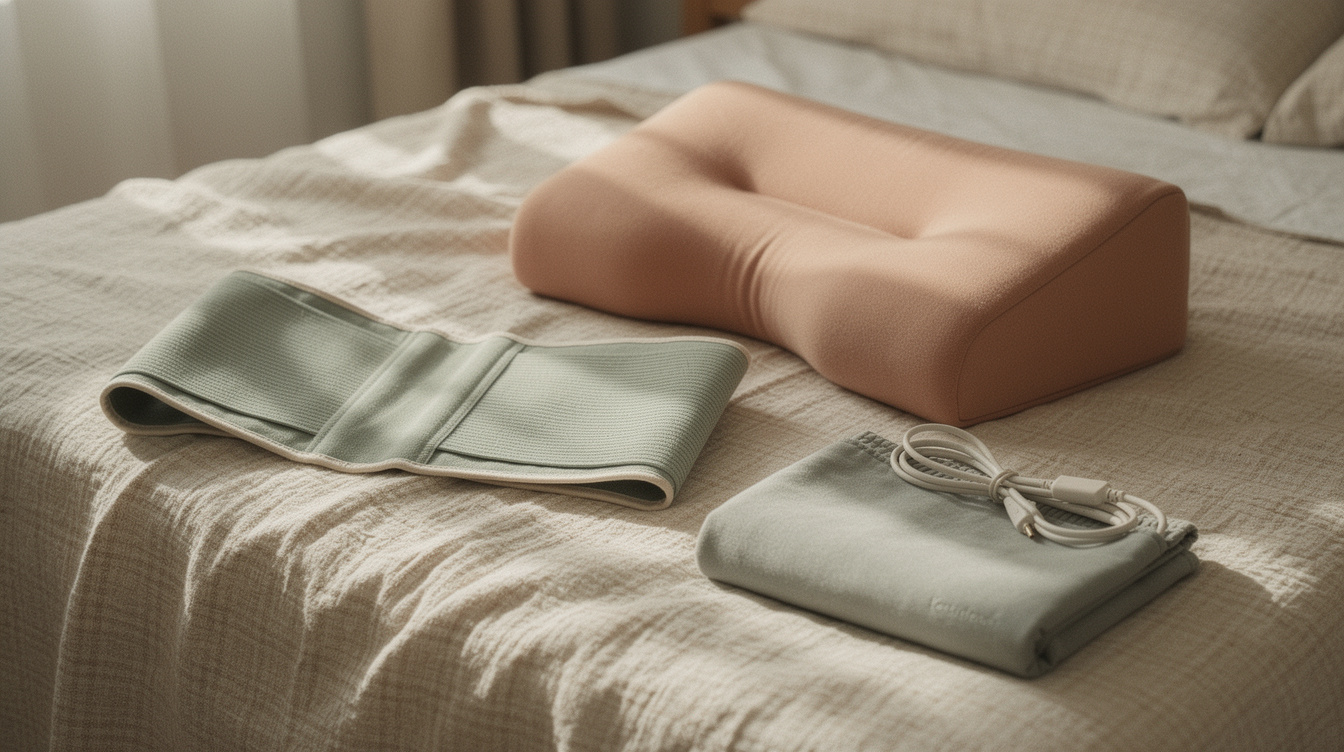
- Support your belly. "Wear an elastic belly band to support your belly," says the Cleveland Clinic. Its anatomy page adds that an abdominal binder "can also help support your abdomen and improve round ligament pain."
- Stretch gently every day. UMass Memorial Health recommends "gentle daily stretches of your hip joints," and the Cleveland Clinic suggests stretching or yoga "to stretch the ligaments gently." Our guide to exercise during pregnancy covers how to stay active safely.
- Rest when it hits. The Cleveland Clinic's advice: "stop doing the movement and rest until it goes away."
- Try warmth. A "warm bath (not hot)" is on the Cleveland Clinic's list, and Baptist Health includes a heating pad and a warm bath.
- Don't stand for long stretches, and skip heavy lifting. Both are on UMass Memorial Health's prevention list.
- Sleep on your side with support. The Cleveland Clinic says providers typically recommend "lying on your side, with your legs drawn up and a pillow between your knees." More on that in our guide to pregnancy sleep positions.
A word on pain relievers
The Cleveland Clinic lists acetaminophen for severe pain, and Baptist Health includes it as an over-the-counter option, but Baptist Health also says to "consult with your healthcare provider before trying any of these treatments." We'd go one step further: ask your OB or midwife before taking any medication during pregnancy, including over-the-counter ones, so they can tell you whether it's right for you and how much to take. Most round ligament pain is gone in seconds and never needs a pill at all.
06When it's not round ligament pain: call your provider
Round ligament pain is common, but it isn't the only thing that hurts low in the belly during pregnancy, and the sources are consistent about when to stop assuming. When you call, your provider may run tests to rule out other causes; UMass Memorial Health mentions checking for things like "an ovarian cyst or enlarged vein" and says providers "will also check for signs of preterm labor or other pregnancy problems."
Call your provider right away if the pain comes with any of these
- Pain that lasts more than a few minutes, or pain that keeps getting worse (UMass Memorial Health; Baptist Health)
- A fever of 100.4°F (38°C) or higher, or chills (UMass Memorial Health; Cleveland Clinic)
- Vaginal bleeding, or a new or changed vaginal discharge (Cleveland Clinic)
- Contractions, or pain or pressure in your lower back (Cleveland Clinic)
- Pain when you pee, or blood in your pee (Cleveland Clinic)
- Nausea or vomiting that isn't from morning sickness (Cleveland Clinic)
Know the signs of preterm labor
Because round ligament pain peaks in the middle of pregnancy, it's worth knowing what preterm labor looks like, so you can tell the two apart. Preterm labor is "labor that starts before 37 completed weeks of pregnancy," according to MedlinePlus. The signs March of Dimes lists include:
- "Change in your vaginal discharge (watery, mucus or bloody) or more vaginal discharge than usual"
- "Pressure in your pelvis or lower belly, like your baby is pushing down"
- "Constant low, dull backache"
- "Belly cramps with or without diarrhea"
- "Regular or frequent contractions that make your belly tighten like a fist"
- "Your water breaks"
March of Dimes is clear on what to do: "If you have even one sign or symptom of preterm labor, call your health care provider right away." MedlinePlus describes the contractions to watch for as coming "every 10 minutes or more often." The difference from round ligament pain is the pattern: a quick stab tied to a movement versus cramping, tightening, or pressure that keeps coming back on its own. If you're not sure which you're feeling, that uncertainty is itself a good reason to call. Our explainer on Braxton Hicks contractions covers the practice contractions that can confuse things further.
07The short version for your fridge
A sharp, brief pain low on one side when you sneeze, stand, or roll over, in the second trimester, that fades within seconds: that's the classic picture of round ligament pain, and it usually eases off by the third trimester. Move slowly, brace before you sneeze, support your belly, and rest when it hits. Anything that lasts, worsens, or arrives with bleeding, fever, contractions, or pain when you pee gets a call, not a wait-and-see.
And if all this is a reminder that the weeks are moving faster than you'd like, our free week-by-week planner turns your due date into a calm, personalized to-do list, with the bigger jobs placed in the middle of pregnancy, while bending over is still a reasonable request.
Questions parents actually ask
What does round ligament pain feel like?
Usually a sudden sharp, stabbing, or pulling pain low in the belly, hip, or groin, on one or both sides. The Cleveland Clinic says it typically lasts only a few seconds or minutes, and UMass Memorial Health notes it often happens on the right side. It's usually set off by a movement, like standing up quickly, rolling over, sneezing, coughing, or laughing.
When does round ligament pain start in pregnancy?
Most often in the second trimester. The Cleveland Clinic says it usually occurs during weeks 14 through 27, when the uterus starts growing more quickly, though it can appear earlier or later. Many people find it eases by the third trimester.
Is round ligament pain harmful to the baby?
Round ligament pain itself is a normal, common symptom caused by ligaments stretching to support your growing uterus. The Cleveland Clinic calls it a common, normal pregnancy symptom, and Baptist Health says it is nothing to be concerned about. The thing to watch is whether the pain is actually round ligament pain: pain that lasts, worsens, or comes with bleeding, fever, or contractions needs a call to your provider.
How can I stop round ligament pain when I sneeze?
Brace for it. The Cleveland Clinic suggests holding your belly or flexing your hips when you sneeze, cough, or laugh, and leaning forward first if you feel one coming. Moving slowly in general, wearing a belly band, and gentle daily hip stretches help too.
How do I tell round ligament pain from preterm labor?
Round ligament pain is a quick, sharp pain tied to a movement that fades within seconds or minutes. Preterm labor, which is labor before 37 weeks, tends to look like regular or frequent contractions, pelvic pressure, a constant low backache, belly cramps, or a change in vaginal discharge, according to March of Dimes. If you have even one of those signs, or you simply aren't sure, call your provider right away.
Sources
- Cleveland Clinic — Round Ligament Pain — Round ligament pain is a common, normal pregnancy symptom; two rope-like bands connecting the uterus to the lower abdominal wall through the groin; ligaments under tension supporting the growing uterus; usually occurs in the second trimester (weeks 14-27) but can appear earlier or later; aches, cramps, spasms, sharp/stabbing/pulling sensation; lower pelvis or groin, one or both sides; lasts seconds or minutes; triggers (changing positions, rolling over, sneezing, coughing, laughing, exercising); relief (belly band, stretching/yoga, rest, holding belly or flexing hips, leaning forward, warm not hot bath, acetaminophen for severe pain); side-sleeping with pillow between knees; often subsides by the third trimester; when to seek care (bleeding, contractions, chills, fever, lower back pain or pressure, severe pain, vaginal discharge, blood in urine, painful urination, nausea or vomiting not from morning sickness).
- Cleveland Clinic — Round Ligament (anatomy) — Round ligament runs through the groin and inserts into the labia, which is why pain can be felt in the vaginal area; stop the movement and rest until the pain goes away; an abdominal binder can help support the abdomen and improve round ligament pain.
- UMass Memorial Health — Understanding Round Ligament Pain in Pregnancy — Ligaments keep the uterus in place; stretch and work harder as the uterus grows and may stretch too quickly; nerve irritation or ligament spasm; sharp pains lasting a few seconds, often on the right side; triggers; move slowly, avoid long standing and heavy lifting, gentle daily hip stretches; providers may test for an ovarian cyst or enlarged vein and check for preterm labor; call for fever of 100.4°F or higher, pains lasting more than a few minutes, worsening pain, bleeding, nausea, vomiting, or new symptoms.
- Baptist Health — Round Ligament Pain in Pregnancy — Common and nothing to be concerned about; typically happens in the second trimester and usually resolves in the third; comes on quickly and stops quickly; treatments including rest, prenatal yoga, stretching, acetaminophen, heating pad, warm bath, maternity belt, with advice to consult a provider first; call for severe pain lasting more than a few minutes, fever or chills, or pain while urinating.
- March of Dimes — Signs and Symptoms of Preterm Labor — Preterm labor is labor before 37 weeks; signs include changed or increased vaginal discharge, pelvic or lower-belly pressure, constant low dull backache, belly cramps, regular or frequent contractions, and water breaking; call your provider right away for even one sign.
- MedlinePlus (NIH) — Preterm Labor — Preterm labor starts before 37 completed weeks of pregnancy; signs include contractions every 10 minutes or more often, pelvic pressure, low dull backache, and abdominal cramps; contact your provider if you think you may be in preterm labor.
Newborn Weeks is planning help, not medical advice — always follow your own doctor, midwife, or pediatrician.
From the gear guide
- Ergobaby Omni Breeze — our pick in baby carriers
- BabyBjörn Baby Carrier Harmony — our pick in baby carriers
- BOB Gear Revolution Flex 3.0 — our pick in full-size strollers
- Guava Lotus Travel Crib — our pick in cribs & travel cribs
Keep reading
 Pregnancy · 12 min read
Stretch Marks During Pregnancy: What Causes Them, What Actually Helps, and What's Safe
Stretch marks during pregnancy affect 50-90% of women. What causes them, why creams don't prevent them, what helps, and what to avoid while pregnant.
Read the article Pregnancy · 11 min read
Dental Care During Pregnancy: Is the Dentist Safe, and What Changes in Your Mouth
Dental care during pregnancy is safe at any stage, per the CDC. What happens to your gums, X-rays and numbing, morning sickness, and when to call the dentist.
Read the article Pregnancy · 10 min read
Headaches During Pregnancy: What Helps, What's Safe to Take, and When to Call
Headaches during pregnancy are common and usually harmless. What helps, what medicine experts say is safe, and the warning signs that mean call right away.
Read the article