The journal · Pregnancy
Morning Sickness: When It Starts, What Actually Helps, and When to Call
In short
Morning sickness is nausea and vomiting of early pregnancy, and it happens at any hour — the name is wrong. It usually begins somewhere between weeks 4 and 9, peaks around weeks 7 to 12, and eases for most people between weeks 12 and 16. The things that actually help are unglamorous: never let your stomach get empty, eat something small every one to two hours, add protein to every snack, drink cold fluids separately from food, and keep crackers at the bedside. Mild to moderate nausea does not hurt the baby. What does need a phone call is vomiting more than three times a day, not keeping fluids down, dark urine, or real weight loss.
You brush your teeth and gag. You open the refrigerator and have to close it again. By the middle of the afternoon you are lying on the bathroom floor wondering how something called morning sickness has been going since 6 a.m. and shows no sign of clocking out.
It is the most common complaint of early pregnancy, and it is also one of the most badly explained. So here is what the medical sources actually say — when it starts, when it usually stops, what genuinely helps, what nobody can promise, and the specific signs that mean this has stopped being ordinary morning sickness and needs a provider on the phone. Every claim below links to the page it came from.
This is general information, not medical advice
Every pregnancy is different, and nausea, vomiting, weight loss, and any medicine or supplement you are considering are worth running past your own OB, midwife, or family doctor — they know your history and you do not have to guess. If you cannot keep fluids down, or something simply feels wrong, call them. That is exactly what they are there for.
01When morning sickness starts — and when it usually stops
There is no single start date, but the sources agree on a window. The MotherToBaby fact sheet on nausea and vomiting in pregnancy says it "usually begins between 4 to 9 weeks of pregnancy," peaks "between 7 and 12 weeks," and goes away "between 12 and 16 weeks of pregnancy in most pregnant women." The Cleveland Clinic draws almost the same line: symptoms can start "as early as the sixth week," peak "around eight to 10 weeks," and end for most people "around the 13th week of pregnancy" — while noting that some people have symptoms as late as week 27.
MedlinePlus, the National Library of Medicine's consumer health site, puts it in plain months: morning sickness "most often begins during the first month of pregnancy and continues through the 14th to 16th week (3rd or 4th month)." The Office on Women's Health says simply that it "usually tapers off by the second trimester."
Put those together and you get the honest answer: most people feel it somewhere in weeks 4 to 9, feel worst somewhere in weeks 7 to 12, and feel noticeably better somewhere in weeks 12 to 16 — and a real minority carry it much further, sometimes the whole way. If you are in that minority, you are not doing pregnancy wrong.
02How common it is, and why the name is wrong
Common enough that it is closer to the rule than the exception. MedlinePlus says "most pregnant women have at least some nausea, and about one third have vomiting." The Cleveland Clinic puts a number on it — "about 70% of women get morning sickness" — and the MotherToBaby fact sheet goes higher still, saying "about 8 out of 10 (80%) of women who are pregnant can have NVP symptoms" (NVP is the clinical shorthand for nausea and vomiting of pregnancy). The exact percentage depends on who is counted and how, but the shape is the same: this is the normal experience of early pregnancy, not a complication.
And the name is a genuine misnomer. The Office on Women's Health notes that "this is called 'morning sickness,' although it can occur at any time of day." MotherToBaby says symptoms "might happen at any time during the day or at night." If yours arrives at 4 p.m. every day like a scheduled train, nothing unusual is happening.
03Why it happens (the part nobody can tell you for certain)
You will read confident explanations everywhere. The sources themselves are more careful. MedlinePlus states it directly: "The exact cause of morning sickness is unknown. It may be caused by hormone changes or lower blood sugar during early pregnancy." The Office on Women's Health says that "in the first trimester hormone changes can cause nausea and vomiting." The Cleveland Clinic points at the specific suspects — rising pregnancy hormones including human chorionic gonadotropin (hCG, the hormone a pregnancy test detects) and estrogen, along with low blood sugar and changes in blood pressure.
So: hormones are the leading explanation, not a proven mechanism, and nobody has pinned down exactly why one person spends twelve weeks queasy and another sails through. MedlinePlus does note that stress, fatigue, travel, and certain foods can make existing symptoms worse — which is the useful part, because those are things you can sometimes do something about.
04What actually helps
None of this is a cure, and anyone selling you one is guessing. What the sources consistently recommend is a set of small, boring habits aimed at one goal: never let your stomach get completely empty, and never flood it either.
The habits the sources actually recommend
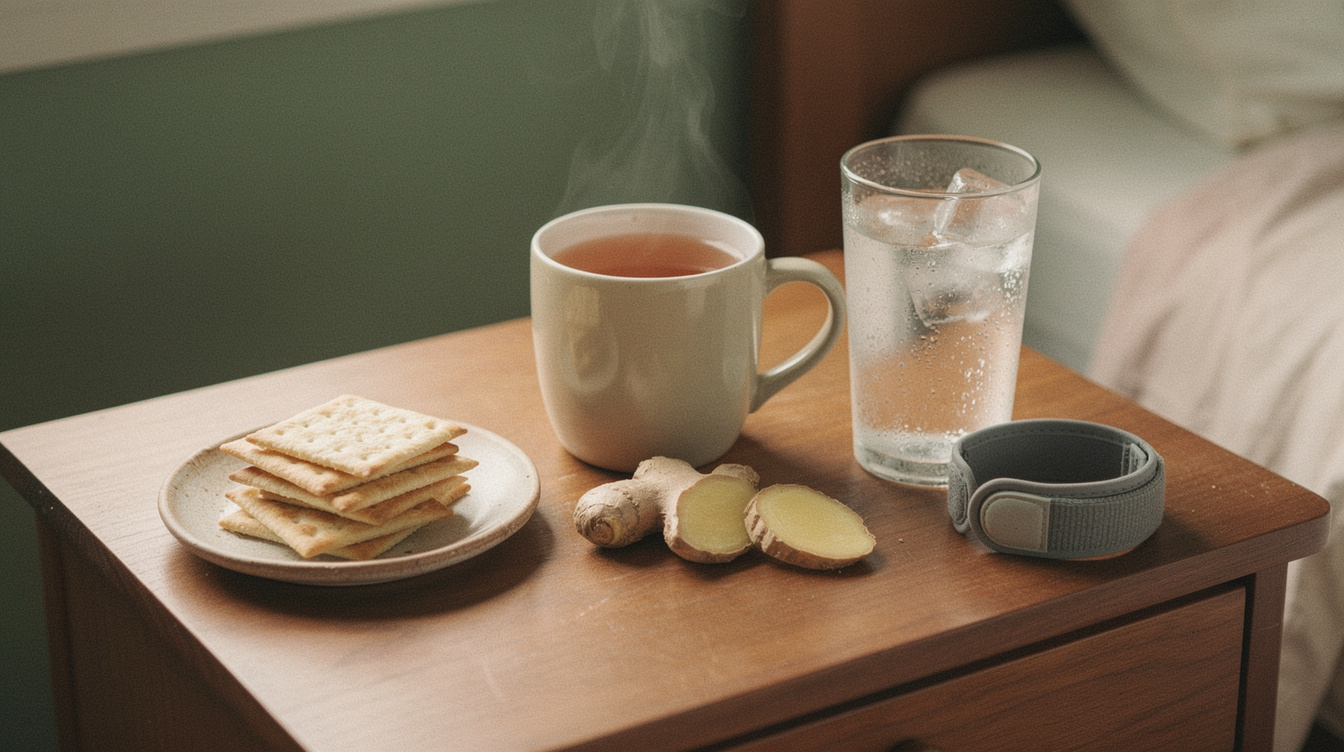
- Eat before you sit up. The Office on Women's Health says to "eat dry toast, saltines, or dry cereals before getting out of bed in the morning." MedlinePlus says the same — crackers or dry toast when you first wake up, before you get up. Keep them on the nightstand the night before.
- Small and often beats three meals. "Eat several small meals instead of three large meals to keep your stomach from being empty" (Office on Women's Health). MotherToBaby is more specific: "eating small meals or a snack every 1-2 hours."
- Put protein in every single snack. MotherToBaby's first dietary recommendation is "adding a protein source to each snack and each meal." MedlinePlus likewise steers toward protein and complex carbohydrates and away from high-fat, low-nutrition food.
- Drink cold, and drink separately. MotherToBaby suggests "drinking cold or partially frozen fluids daily (8 cups)" and "keeping solids and liquids separate, by drinking 20 to 30 minutes before or after meals" — not with them. This one is widely ignored and surprisingly effective.
- Keep food bland and low-fat. "Eat bland foods that are low in fat and easy to digest, such as cereal, rice, and bananas" (Office on Women's Health). MedlinePlus adds gelatin, broth, and saltines for the moments when nausea is already there.
- Try ginger. MedlinePlus lists "ginger products (proven effective against morning sickness) such as ginger tea, ginger candy, and ginger soda." It is the one home remedy that page vouches for in those words.
- Get the smells out of the room. "Avoid smells that upset your stomach" (Office on Women's Health). MedlinePlus suggests keeping air circulating to cut down on odors, and the Cleveland Clinic says to stay away from triggering smells. Cooking smells are usually the worst offender — cold food has less of one.
- Move your prenatal vitamin to bedtime. MedlinePlus suggests taking prenatal vitamins at night, and increasing vitamin B6 through food — whole grains, nuts, seeds, and legumes.
- Rest more than feels reasonable. The Cleveland Clinic's advice is to get "plenty of rest," and MedlinePlus names fatigue as something that makes nausea worse. Early pregnancy exhaustion is its own topic — our guide to the first twelve weeks covers what actually matters in that stretch.
Two more are worth a mention with their caveats attached. MedlinePlus lists acupressure wrist bands and acupuncture among things to consider, but says to talk with your provider first. And it is blunt about smoking and secondhand smoke: avoid both.
The one rule underneath all of the above
An empty stomach makes nausea worse, and a full one makes it worse too. Everything on that list is a way of staying in the narrow band between the two — a few bites every hour or so, with something to drink twenty minutes either side. It is not elegant and it does not look like eating well. For six or eight weeks, getting calories in at all is the goal; the balanced plates can come back later.
05What about medicine?
There are prescription options, and they are a conversation with your provider rather than something to work out from a website. The MotherToBaby fact sheet confirms that "there are prescription medications that have been used to treat NVP" and points readers to their own provider to choose among them. MedlinePlus's instruction is the one to follow in the meantime: check with your provider before taking any medicine for nausea, including anything over the counter.
We are not going to list doses or name a first-line drug here. The two specialty guidelines we tried to read for this piece would not load for us, and we would rather say that plainly than repeat drug advice we could not verify against the original. Your OB or midwife deals with this every week and can tell you what fits your pregnancy.
One thing worth knowing because it is actively marketed: the FDA's Office of Women's Health warns that cannabis products sold as relief for severe pregnancy nausea are not FDA-approved for it. That is a product category to leave alone and raise with your provider instead.
06When it is more than morning sickness
There is a severe form, it has a name — hyperemesis gravidarum — and the line between it and ordinary morning sickness is less about how awful you feel and more about what you can still do. The FDA draws it clearly: someone with morning sickness can "generally proceed with normal daily activities" and can still eat and drink some of the time, while someone with hyperemesis gravidarum cannot keep down enough food or fluid to get by.
It is uncommon but not rare. The FDA says it "affects 0.3-10.8% of pregnant women" — a wide range, because studies define it differently — and the MotherToBaby fact sheet puts it at around 3 percent of pregnancies. Treatment, per the FDA, can involve intravenous fluids, anti-nausea medicine, and sometimes a hospital stay, with nutrition given by IV or feeding tube in the worst cases. The FDA also notes there is no medicine approved specifically for hyperemesis gravidarum, which is part of why it needs a clinician steering rather than a home remedy.
Call your provider if any of these are true
- You are vomiting more than three times a day. MedlinePlus, the Cleveland Clinic, and the FDA all name this same threshold.
- You cannot keep food or liquids down at all. MedlinePlus lists this directly; the FDA says to seek care if you cannot tolerate fluids for more than twelve hours.
- Your urine is dark and concentrated, or you are barely going. A dehydration sign flagged by MedlinePlus, the Cleveland Clinic, and the FDA.
- You are losing real weight. The FDA's marker is weight loss over 5% of your pre-pregnancy weight; it also lists losing more than five pounds as a reason to be seen.
- There is blood in the vomit. Named by both MedlinePlus and the FDA. Do not wait on this one.
- You feel weak, dizzy, faint, or confused. The FDA lists weakness, dizziness, lightheadedness, fainting, and confusion among the signs that need attention.
- The nausea lasts all day, or runs past the fourth month. The Cleveland Clinic flags all-day nausea; MedlinePlus flags symptoms continuing beyond month four.
- It is wrecking your daily life. MotherToBaby's threshold is the kindest and the most useful: "if NVP is affecting your ability to eat/drink, sleep, and/or perform your daily activities, speak with your healthcare provider." You do not have to be dangerously ill to deserve help.
07Is it hurting the baby?
This is the question that keeps people awake, and the answer is reassuring. MedlinePlus states it about as plainly as a medical page can: "Morning sickness does not hurt the baby in any way unless you lose weight, such as with severe vomiting." It adds that mild weight loss in the first trimester is not uncommon with moderate symptoms and is not harmful to the baby. The Cleveland Clinic agrees that "mild to moderate nausea and vomiting during pregnancy usually isn't harmful."
The MotherToBaby fact sheet goes further on two points worth hearing: most research has not found that nausea and vomiting of pregnancy increases the chance of birth defects, and some studies have found that people with it may be less likely to miscarry. The caveat is the severe end — with hyperemesis gravidarum, malnutrition and dehydration can matter, and MotherToBaby notes babies may be slightly smaller. The Cleveland Clinic makes the same point: when nausea is severe enough to prevent adequate nutrition, it can affect a baby's birth weight.
Which is exactly why the call-your-provider list above is worth taking seriously. Ordinary morning sickness is miserable and harmless. The severe version is treatable, and treating it protects both of you.
08Getting through the weeks
Practically: keep crackers in your bag, your car, and your nightstand. Ask someone else to do the cooking, or eat cold food, which smells less. Let the housework slide — the weeks when you cannot stand upright near a stove are not the weeks to deep-clean anything. And if you are working through it, small frequent snacks are easier to defend to yourself when you remember they are the actual medical advice, not snacking.
The one thing that genuinely helps beyond food is not having to think. If you are in the thick of the first trimester, our first-trimester checklist and our pregnancy checklist cover what actually has to happen now versus what can wait — and our free week-by-week planner turns the whole stretch into one small task at a time, with the heavy preparation deliberately pushed into the middle of pregnancy, when you will feel human again.
Because that is the part most people on the other side remember: it does end. Somewhere around weeks 12 to 16 for most, the smell of coffee becomes bearable again, and the crackers go back in the cupboard.
Questions parents actually ask
When does morning sickness start?
Usually between weeks 4 and 9 of pregnancy, according to the MotherToBaby fact sheet on nausea and vomiting in pregnancy. The Cleveland Clinic says it can begin as early as the sixth week, and MedlinePlus says it most often begins during the first month. There is no fixed start date, and starting earlier or later than the window is not a sign of a problem.
When does morning sickness end?
For most people, somewhere between weeks 12 and 16. MotherToBaby says symptoms go away between 12 and 16 weeks in most pregnant women, the Cleveland Clinic says around the 13th week, and MedlinePlus says it continues through the 14th to 16th week. A minority have symptoms much longer — the Cleveland Clinic notes some people have them as late as week 27, and some have them the whole pregnancy.
What helps morning sickness the most?
Keeping your stomach from being empty, in small amounts. The sources consistently recommend eating dry toast or saltines before you get out of bed, eating a small meal or snack every one to two hours instead of three large meals, adding protein to every snack, drinking cold fluids 20 to 30 minutes before or after eating rather than with food, sticking to bland low-fat food, and avoiding smells that set you off. MedlinePlus also lists ginger tea, ginger candy, and ginger soda as proven effective.
Does morning sickness hurt the baby?
MedlinePlus says morning sickness does not hurt the baby in any way unless you lose weight, as can happen with severe vomiting, and that mild first-trimester weight loss with moderate symptoms is not harmful. The Cleveland Clinic agrees that mild to moderate nausea and vomiting usually isn't harmful. Severe cases that prevent adequate nutrition are different and need medical care.
Why is it called morning sickness if I feel sick all day?
Because the name is inaccurate. The Office on Women's Health notes it can occur at any time of day, and MotherToBaby says symptoms might happen at any time during the day or at night. All-day nausea is worth mentioning to your provider — the Cleveland Clinic lists nausea that lasts all day long as a reason to get in touch — but it is not unusual.
What is hyperemesis gravidarum?
The severe form of pregnancy nausea and vomiting. The FDA describes the difference in terms of function: with morning sickness you can generally proceed with normal daily activities and still eat and drink something, while with hyperemesis gravidarum you cannot keep down enough food or fluid. The FDA says it affects 0.3 to 10.8 percent of pregnant women and MotherToBaby puts it at about 3 percent of pregnancies. It is treated with IV fluids, anti-nausea medicine, and sometimes a hospital stay.
Can I take anything for morning sickness?
Ask your provider before taking any medicine, including over-the-counter products — that is MedlinePlus's instruction. MotherToBaby confirms there are prescription medicines used to treat pregnancy nausea and vomiting, and your OB or midwife can tell you which fits your pregnancy. One specific warning from the FDA: cannabis products marketed for severe pregnancy nausea are not FDA-approved for it.
Sources
- MedlinePlus (National Library of Medicine) — Morning sickness — Most pregnant women have at least some nausea and about one third have vomiting; most often begins during the first month and continues through the 14th to 16th week; exact cause unknown, possibly hormone changes or lower blood sugar; stress, fatigue, travel, and certain foods can worsen it; does not hurt the baby in any way unless you lose weight, and mild first-trimester weight loss with moderate symptoms is not harmful; home care including crackers or dry toast before getting out of bed, snacks every 1-2 hours, protein and complex carbohydrates, bland foods, ginger products described as proven effective, acupressure bands or acupuncture after asking a provider, air circulation to reduce odors, avoiding smoking and secondhand smoke, prenatal vitamins at night, vitamin B6 from whole grains, nuts, seeds, and legumes, and checking with a provider before taking any medicine; when to contact a provider including vomiting more than three times a day, inability to keep food or liquids down, dark concentrated urine, vomiting blood, excessive weight loss, and symptoms continuing past the fourth month.
- MotherToBaby (OTIS) — Nausea and Vomiting in Pregnancy (NVP) fact sheet — About 8 out of 10 (80%) of pregnant women can have NVP symptoms; symptoms may occur any time of day or night; usually begins between 4 and 9 weeks, peaks between 7 and 12 weeks, and resolves between 12 and 16 weeks in most pregnant women; dietary management including small meals or a snack every 1-2 hours, adding a protein source to each snack and meal, drinking cold or partially frozen fluids (8 cups daily), and keeping solids and liquids separate by drinking 20 to 30 minutes before or after meals; bland foods; most research has not found an increased chance of birth defects and some studies suggest a lower chance of miscarriage; hyperemesis gravidarum affects about 3% of pregnancies and can cause malnutrition, dehydration, and slightly smaller babies; prescription medications have been used to treat NVP; speak with a healthcare provider if NVP affects your ability to eat, drink, sleep, or do daily activities.
- Cleveland Clinic — Morning Sickness (Nausea and Vomiting of Pregnancy) — About 70% of women get morning sickness; can start as early as the sixth week, peaks around eight to 10 weeks, and ends for most around the 13th week, with some having symptoms as late as week 27; suspected causes include rising hCG and estrogen, low blood sugar, and blood pressure changes; management including crackers or toast in the morning, several small meals instead of three large meals, plenty of rest, and avoiding triggering odors; severe morning sickness involves vomiting more than three times a day with severe dehydration and significant weight loss; mild to moderate nausea and vomiting usually isn't harmful, but severe cases preventing adequate nutrition can affect birth weight; contact a provider for all-day nausea, vomiting three or more times daily, or little to no urination.
- U.S. FDA Office of Women's Health — Beyond Morning Sickness: Hyperemesis Gravidarum — Women with morning sickness can generally proceed with normal daily activities and can still eat and drink, while hyperemesis gravidarum prevents adequate intake of food and fluids; affects 0.3-10.8% of pregnant women; symptoms include vomiting more than three times daily, weight loss exceeding 5% of pre-pregnancy weight, and dehydration signs such as dark urine, dry skin, weakness, dizziness and fainting; treatment involves IV fluids, anti-nausea medication, and possibly hospitalization, with nutrition given intravenously or by tube; no FDA-approved medication exists specifically for hyperemesis gravidarum; cannabis products claiming to relieve it are not FDA-approved; seek care for inability to tolerate fluids beyond 12 hours, bloody vomit, confusion, or weight loss over five pounds.
- Office on Women's Health (U.S. Dept. of Health and Human Services) — Body changes and discomforts — In the first trimester hormone changes can cause nausea and vomiting; it is called morning sickness although it can occur at any time of day; usually tapers off by the second trimester; eat several small meals instead of three large meals to keep your stomach from being empty; eat dry toast, saltines, or dry cereals before getting out of bed in the morning; eat bland foods low in fat and easy to digest such as cereal, rice, and bananas; avoid smells that upset your stomach; call your doctor if you have severe, constant nausea and/or vomiting several times every day.
Newborn Weeks is planning help, not medical advice — always follow your own doctor, midwife, or pediatrician.
From the gear guide
- Mamazing Ultra Air Stroller — our pick in travel strollers
- Jeep Altitude Compact Travel Stroller — our pick in travel strollers
- Crane Ultrasonic Cool Mist Humidifier — our pick in humidifiers
- VTech Audio Baby Monitor, DECT 6.0 — our pick in baby monitors
Keep reading
 Postpartum · 12 min read
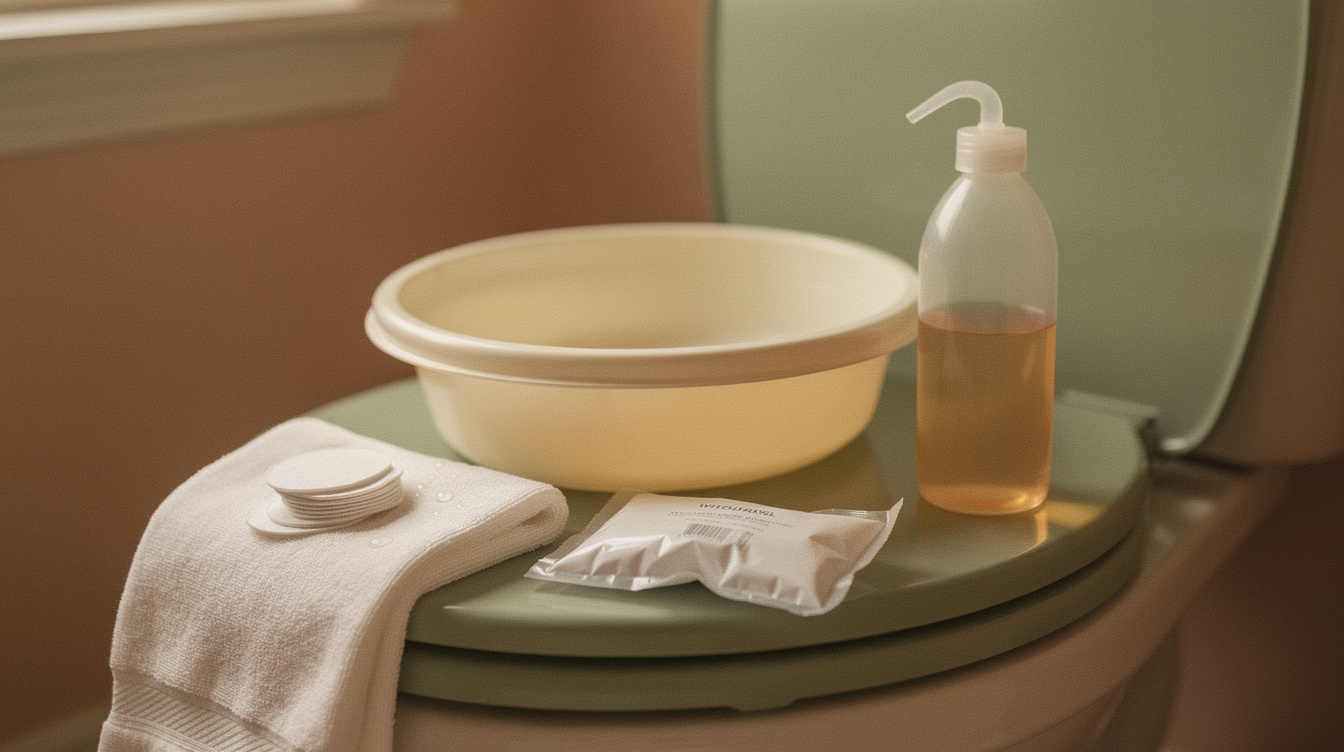
Perineal Care After Birth: How to Soothe Stitches and Soreness
Perineal care after birth, step by step: ice in the first day, a peri bottle, sitz baths, stitches that dissolve on their own, and when to call.
Read the article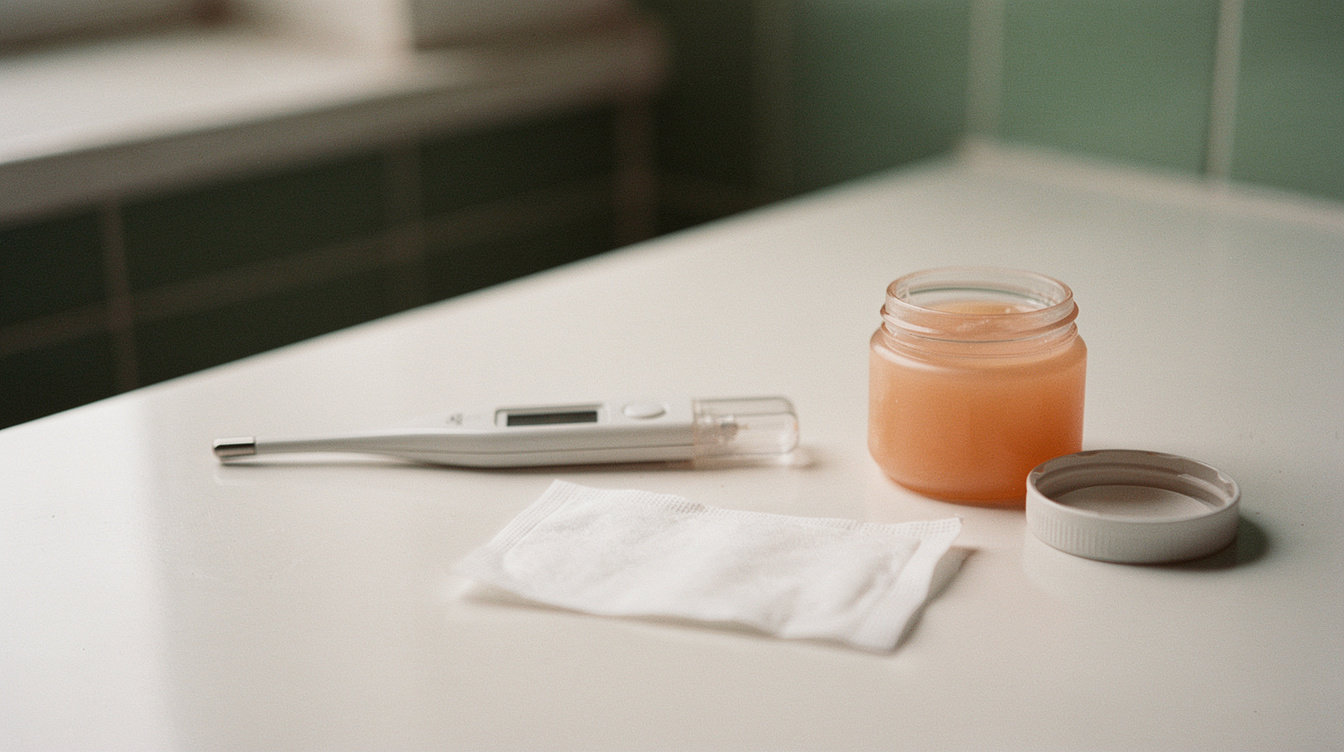 Newborn basics · 11 min read
How to Take a Baby's Temperature (and Which Number Actually Counts)
How to take a baby's temperature step by step: why rectal is the number doctors act on, what the armpit and forehead are good for, and the 100.4 rule.
Read the article Feeding · 11 min read
Sore Nipples From Breastfeeding: Why It Hurts and What Actually Helps
Sore nipples from breastfeeding are common in the first days — but lasting pain is a warning sign, not a rite of passage. What AAP, WIC, and LLL advise.
Read the article