The journal · Newborn basics
Newborn Constipation: What's Normal, What Isn't, and What Actually Helps
In short
Most babies who look constipated are not. Newborns normally strain, grunt, and go red in the face, and a breastfed baby can go days — sometimes a week — between dirty diapers and still be perfectly fine. What matters is the stool, not the show: hard, pellet-like, difficult or painful stools are constipation, while soft stool that eventually arrives after a lot of effort usually is not. If your baby is at least a month old, the AAP suggests a small amount of apple or pear juice. Call your pediatrician if your baby is under a month old, if there is blood, or if straining comes with vomiting, a swollen belly, or poor weight gain.
Your baby has been grunting at the ceiling for ten minutes. Knees pulled up, face purple, the kind of sound you would make moving a couch. And then: nothing. Or a diaper so unremarkable you wonder what all that was about. It is one of the most common 2 a.m. worries there is, and almost always the answer is not the one parents fear.
Newborn constipation is real, but it is far less common than it looks — and the thing most parents are watching (the effort) is not the thing that tells you whether a baby is constipated (the stool). Here is what pediatric sources actually say about what is normal, what counts as constipation, what helps, and the handful of signs that mean picking up the phone instead of waiting it out.
01What newborn constipation actually means
The definition is simpler than you would expect, and it has nothing to do with how hard your baby works. MedlinePlus puts it plainly: constipation in infants and children "means they have hard stools or have problems passing stools." The National Institute of Diabetes and Digestive and Kidney Diseases fills in the detail — stools that are "hard, dry, or lumpy," stools that are "difficult or painful to pass," fewer than two bowel movements a week, and a swollen abdomen or bloating.
Notice what is not on that list: grunting, straining, crying, or going a long stretch between diapers. Those are the things parents notice first, and on their own they are usually not constipation at all. The American Academy of Pediatrics is reassuring about how uncommon the real thing is in the newborn weeks: "True constipation — as defined by hard, difficult to pass, or infrequent poop — isn't a big issue for most young infants."
02How often a newborn is supposed to poop
There is no single right number, which is exactly why this worries so many people. The AAP's own range is wide: what is normal "ranges anywhere from one poop every several days to several poops every day," and in general "breastfed babies poop more than formula-fed ones, and younger babies poop more than older ones" (HealthyChildren.org). Newborns also "tend to have several tiny poops in succession," so one diaper is not always one bowel movement.
Feeding method changes the picture more than anything else:
- Breastfed babies, after the first month, can go a long time. The AAP says breastfed infants "may go several days or even a week between bowel movements" (HealthyChildren.org). Going "as many as 5 to 7 days between poops is not necessarily a problem for babies who have already proven themselves fully capable of pooping during their first couple of weeks." By three to six weeks, some breastfed babies have only one bowel movement a week and are perfectly normal, as long as stools stay soft and weight gain is steady (HealthyChildren.org).
- Formula-fed babies should go more regularly. The AAP expects "a bowel movement at least once most days, but may go 1 to 2 days between bowel movements." Elsewhere it is more direct: a formula-fed baby "should have at least one bowel movement a day. If they have fewer than this and appear to be straining, they may be constipated."
- In the very first month, too few can mean too little milk. For a breastfed newborn, fewer than one bowel movement a day in that first month can be a sign the baby is not getting enough to eat rather than a sign of constipation (HealthyChildren.org). MedlinePlus describes the same pattern: "In the first month, infants tend to have bowel movements about once a day. After that, babies can go a few days or even a week between bowel movements."
- The texture is the tell. A breastfed baby's stool should be "yellow liquid mixed with some particles." A formula-fed baby's is "tan or yellow in color" and "firmer than a breastfed baby's, but should be no firmer than soft clay" (HealthyChildren.org).
If the first days are what you are trying to decode — the black, tar-like meconium that "filled their intestines before birth," and the shift to yellow-green that follows — our guide to newborn poop and what's normal walks through the whole progression diaper by diaper.
03Straining is not the same as constipated
This is the single most useful thing to know, so here it is in the AAP's words: "Infants normally work really hard to have a bowel movement, so straining at the stool isn't necessarily alarming, even when the infant cries or gets red in the face" (HealthyChildren.org). And the practical test: "As long as your baby's poop is fairly soft and comes out easily, you can breathe with relative ease despite the dramatic degree of discomfort your baby seems to display."
There is even a name for the dramatic version. Pediatric gastroenterologists call it infant dyschezia, and it is a recognized, harmless pattern described in the Rome IV criteria for infant digestive disorders: "straining, screaming, crying, and turning red or purple in the face while making an effort to defecate in a child that has daily soft stools." The published criteria put it at ten or more minutes of straining and crying, in a baby under nine months, ending in soft stool.
The reason it happens is almost sweet: a brand-new baby has not yet learned to coordinate two separate jobs at once. The mechanism is "the failure to coordinate increased intra-abdominal pressure with relaxation of the pelvic floor muscles" — in plain words, the push and the letting-go are not yet in sync. It sorts itself out with practice. The same review notes that infant dyschezia "is easily mistaken for constipation and it is important to distinguish between these two disorders," that the behavior "resolves spontaneously," and that "medical interventions are not necessary."
Please don't help it along from the back end
The temptation to insert a thermometer tip, a cotton swab, or a suppository is strong at 2 a.m., and the Rome IV review is specific about why not: "caregivers are advised to avoid rectal stimulation, since this may be disturbing for the child or may condition the child to wait for stimulation to defecate. There is no need for laxatives." A baby who learns to wait for help is a harder problem than the one you started with. If you genuinely think your baby needs something rectal, that is a phone call to your pediatrician, not a home experiment.
04The signs that do point to constipation
The AAP gives parents a short set of questions to run through. Any of these "can all suggest actual constipation" (HealthyChildren.org).
Ask yourself these five questions
- Is my baby excessively fussy? Not the usual evening fussing — a clear change in baseline.
- Is my baby spitting up more than usual? A backed-up system often shows up at the other end.
- Is my baby having dramatically more or fewer bowel movements than before? The change from your baby's own pattern matters more than any number in a book.
- Are my baby's stools unusually hard, or do they contain blood related to hard stools? Hard pellets, or streaks of blood from a small tear, are the clearest signal on this list.
- Does my baby strain for more than 10 minutes without success? Ten minutes of effort that ends in soft stool is dyschezia. Ten minutes that ends in nothing, repeatedly, is worth a call.
05What actually helps
For a baby who really is constipated, the first-line advice is smaller and duller than the internet suggests — and it depends on age.
Under one month old: call, don't treat
The AAP's juice suggestion begins at one month ("Once your baby is at least a month old..."), which means there is no at-home remedy on that list for a newborn younger than that. In the first few weeks, a baby who seems genuinely constipated is a baby to describe to your pediatrician, not to experiment on. Trouble passing stool in a very young infant can have causes that need looking into — NIDDK lists conditions including "Hirschsprung disease" and "celiac disease," along with neurological and metabolic conditions and structural problems of the colon or rectum, among the medical causes of constipation in children. Rare, but exactly the sort of thing a doctor rather than a search engine should rule out.
One month and older: a little juice
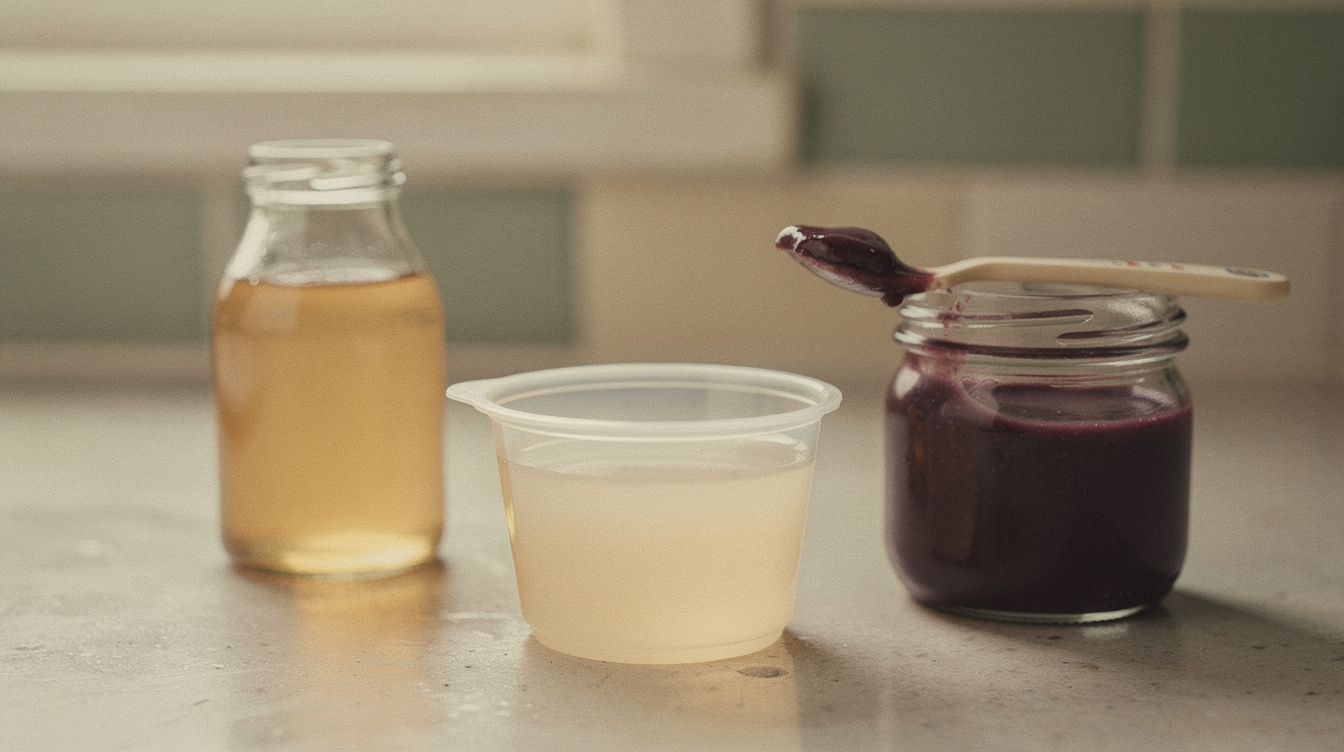
Here is the AAP's version: "Once your baby is at least a month old, if you think they are constipated, you can try giving them a little apple or pear juice," because the sugars in those juices draw fluid into the intestines and loosen the stool. The amount is deliberately small — "1 ounce a day for every month of life up to about 4 months," so a three-month-old would get three ounces.
One honest wrinkle. MedlinePlus suggests a larger amount for infants over two months — "2 to 4 ounces (59 to 118 mL) of fruit juice (grape, pear, apple, cherry, or prune) twice a day." Those two reputable sources do not match, and we are not going to pretend otherwise or split the difference for you. The AAP's smaller, weight-for-age amount is the more conservative of the two, and the amount for your baby is a question for your pediatrician — it is a thirty-second conversation and it beats guessing between two numbers.
Once solids have started
After solid foods are in the picture, food does the work. The AAP suggests "vegetables and fruits, especially that old standby, prunes." MedlinePlus lists specifics for infants over four months who are eating solids: high-fiber baby foods "such as peas, beans, apricots, prunes, peaches, pears, plums, and spinach twice a day."
And if what you are really dealing with is a baby who squirms, pulls up their knees, and seems uncomfortable between diapers, the problem may be gas rather than stool — different cause, different fixes, and our newborn gas relief guide covers those. If you are unsure whether your breastfed baby is simply not taking in enough, this guide to telling whether baby is getting enough milk walks through the diaper counts and weight checks pediatricians actually use.
06When to call your pediatrician
Most of this resolves on its own. These are the lines where sources we checked say to stop waiting.
- Your baby is under a month old and seems constipated. There is no home remedy for this age group in the AAP's guidance — call.
- The dietary changes didn't work. The AAP: "If these dietary changes don't help, it's time to call your child's pediatrician."
- There is blood in the stool, or large amounts of mucus or water (HealthyChildren.org).
- A formula-fed or combination-fed baby goes three days with no stool and is vomiting or irritable. MedlinePlus says to contact your provider "right away" for this, noting the exception for babies who are only breastfed.
- Symptoms last more than two weeks, or come with rectal bleeding, severe bloating, constant abdominal pain, vomiting, or weight loss (NIDDK).
- Your baby isn't gaining weight as expected. The AAP's reassurance about long gaps between stools in breastfed babies rests on two conditions: the stools stay soft and the weight gain is steady. If either one slips, the reassurance no longer applies.
- Any fever in a baby under three months. A rectal temperature of 100.4°F in a baby that young is its own urgent call, whatever the diapers are doing — see newborn fever and when to call.
This is general information, not medical advice
We have cited what the AAP, NIDDK, and MedlinePlus publish, but none of it is a substitute for someone who can actually examine your baby. Your pediatrician knows your baby's weight curve, feeding history, and birth details, and none of those are things an article can account for. If something feels wrong — even if nothing on this page matches — call them. Parents who call about diapers are not wasting anyone's time; this is one of the most common calls a pediatric office takes.
07The short version to keep in your head
Watch the stool, not the struggle. Soft stool that arrives after a dramatic ten-minute performance is a baby learning how their body works. Hard, pellet-like, painful stool — or a baby who is fussier, spitting up more, and straining with nothing to show for it — is constipation, and it has a short, practical fix at most ages. Under a month old, skip the fix and make the call.
Diapers are the thing you will examine more often than anything else in the first twelve weeks, and almost none of it is intuitive. The rest of that learning curve — feeding, sleep, bathing, temperatures, and the calls worth making — is in our newborn basics guide, sourced the same way this page is.
Questions parents actually ask
How do I know if my newborn is constipated?
Look at the stool rather than the effort. Constipation means hard stools or trouble passing them — the AAP's warning signs are a baby who is excessively fussy, spitting up more than usual, having dramatically more or fewer bowel movements than their own normal, passing unusually hard stools or stools with blood from hard stools, or straining more than 10 minutes without success. Straining, grunting, crying, and going red in the face while still producing soft stool is normal newborn work, not constipation.
How long can a newborn go without pooping?
It depends on how they are fed. The AAP says breastfed infants may go several days or even a week between bowel movements, and that 5 to 7 days is not necessarily a problem for a baby who has already proven they can poop during the first couple of weeks. Formula-fed babies are expected to go at least once most days, and may go 1 to 2 days between movements — fewer than that with straining may be constipation. In the first month, a breastfed baby having fewer than one bowel movement a day may not be getting enough milk.
What can I give my baby for constipation?
Once your baby is at least a month old, the AAP suggests a little apple or pear juice, because the sugars draw fluid into the intestines and loosen the stool — about 1 ounce a day for every month of life, up to about 4 months. MedlinePlus suggests a larger amount for babies over two months, so the two sources differ; ask your pediatrician what amount is right for your baby. Once solids have started, the AAP suggests vegetables and fruits, especially prunes.
My baby strains and cries but the poop is soft. What is that?
That pattern has a name: infant dyschezia. The Rome IV criteria describe it as straining, screaming, crying, and turning red or purple in the face while trying to pass stool, in a baby under nine months who has daily soft stools. It happens because a new baby has not yet learned to coordinate pushing with relaxing the pelvic floor muscles. It resolves on its own, needs no treatment, and is easily mistaken for constipation.
Should I use a rectal thermometer or suppository to help my baby poop?
Not on your own. The Rome IV review advises caregivers to avoid rectal stimulation, because it can be upsetting for the baby and can condition them to wait for stimulation before passing stool — and it notes there is no need for laxatives. If you think your baby needs something beyond dietary changes, call your pediatrician first.
When is newborn constipation an emergency?
Call your pediatrician right away if your baby is under a month old and seems constipated, if there is blood in the stool, or if a formula-fed baby goes three days without a stool and is vomiting or irritable. NIDDK also lists rectal bleeding, severe bloating, constant abdominal pain, vomiting, weight loss, or symptoms lasting more than two weeks as reasons to be seen. Any fever in a baby under three months is its own urgent call.
Sources
- HealthyChildren.org (AAP) — How Can I Tell If My Baby is Constipated? — Straining at stool isn't necessarily alarming even when the infant cries or gets red in the face; formula-fed babies have a bowel movement at least once most days and may go 1 to 2 days between; breastfed infants may go several days or even a week between bowel movements; fewer than one a day in the first month may mean a breastfed baby isn't eating enough; the five signs that can suggest actual constipation (excessive fussiness, more spitting up, dramatically more or fewer bowel movements, unusually hard stools or blood from hard stools, straining more than 10 minutes without success); apple or pear juice once the baby is at least a month old at 1 ounce a day per month of life up to about 4 months; vegetables, fruits and prunes once on solids; call the pediatrician if dietary changes don't help.
- HealthyChildren.org (AAP) — Pooping By the Numbers: What's Normal for Infants? — Normal ranges from one poop every several days to several poops a day; breastfed babies poop more than formula-fed and younger babies more than older; newborns tend to have several tiny poops in succession; 5 to 7 days between poops is not necessarily a problem for babies who have proven they can poop in the first couple of weeks; true constipation isn't a big issue for most young infants; if poop is fairly soft and comes out easily, the dramatic discomfort is not cause for alarm.
- HealthyChildren.org (AAP) — Baby's First Days: Bowel Movements & Urination — Meconium is thick black or dark green and fills the intestines before birth, after which stools turn yellow-green; by 3 to 6 weeks some breastfed babies have only one bowel movement a week and are normal if stools stay soft and weight gain is steady; formula-fed babies should have at least one bowel movement a day and fewer with straining may mean constipation; breastfed stool is yellow liquid with some particles, formula-fed stool is tan or yellow and no firmer than soft clay; call the pediatrician for signs of constipation or large amounts of blood, mucus or water in the stool; rectal temperature of 100.4°F in a baby under three months warrants a call.
- MedlinePlus (NIH) — Constipation in infants and children — Constipation in infants and children means hard stools or problems passing stools; in the first month infants tend to have bowel movements about once a day, after which babies can go a few days or even a week; 2 to 4 ounces (59 to 118 mL) of fruit juice (grape, pear, apple, cherry, or prune) twice a day for infants over 2 months; high-fiber baby foods such as peas, beans, apricots, prunes, peaches, pears, plums and spinach twice a day for infants over 4 months on solids; contact the provider right away if an infant (except those only breastfed) goes 3 days without a stool and is vomiting or irritable.
- NIDDK (NIH) — Symptoms & Causes of Constipation in Children — Symptoms include fewer than two bowel movements a week, stools that are hard, dry or lumpy, stools that are difficult or painful to pass, and a swollen abdomen or bloating; medical causes include Hirschsprung disease, celiac disease, neurological and metabolic conditions, and structural problems of the colon or rectum; see a doctor if symptoms last more than two weeks or with rectal bleeding, blood in stool, severe bloating, constant abdominal pain, vomiting, or weight loss.
- The New Rome IV Criteria for Functional Gastrointestinal Disorders in Infants and Toddlers (PMC, NIH National Library of Medicine) — Infant dyschezia is straining, screaming, crying and turning red or purple in the face while trying to defecate in a child with daily soft stools; the Rome IV age limit is 9 months and the criteria involve 10 or more minutes of straining and crying before passing soft stool; the mechanism is failure to coordinate increased intra-abdominal pressure with relaxation of the pelvic floor muscles; it resolves spontaneously, reassurance is key and medical interventions are not necessary; caregivers are advised to avoid rectal stimulation because it may disturb the child or condition them to wait for stimulation, and there is no need for laxatives; infant dyschezia is easily mistaken for constipation.
Newborn Weeks is planning help, not medical advice — always follow your own doctor, midwife, or pediatrician.
From the gear guide
- Mamazing Ultra Air Stroller — our pick in travel strollers
- Jeep Altitude Compact Travel Stroller — our pick in travel strollers
- The First Years Spin Stack Drying Rack — our pick in sterilizers & drying racks
- Frida Baby Windi Gas Passer — our pick in nail care & grooming
Keep reading
 Pregnancy · 11 min read
Foods to Avoid During Pregnancy: The Honest, Source-Cited List
The real foods to avoid during pregnancy, straight from the FDA and CDC — which fish, cheeses, and deli meats, and what's fine once it's heated.
Read the article Newborn basics · 14 min read
RSV in Babies: The Symptoms That Matter and When to Call
RSV in babies starts out looking like a cold. The AAP and CDC warning signs that mean call now, what helps at home, and the two ways to prevent it.
Read the article Pregnancy · 14 min read
Cord Blood Banking: What It Costs, What It Treats, and What the AAP Recommends
Cord blood banking, explained: what it treats, what private banks charge, and why the AAP recommends donating to a public bank unless a sibling needs it.
Read the article