The journal · Pregnancy
Preeclampsia Signs and Symptoms: What to Watch For and When to Call
In short
Preeclampsia is high blood pressure that shows up after about 20 weeks of pregnancy, usually along with protein in your urine, and it complicates roughly 4 percent of pregnancies in the United States. The signs to know by heart are a headache that will not go away, changes in your vision, sudden swelling of the face or hands, pain under the ribs on the right side, and trouble breathing — any of those means call your provider the same day, not at your next visit. It can also appear for the first time after the birth, most often in the first 48 hours but up to six weeks later, which is why the warning signs matter after you are home. Nobody knows what causes it, there is no way to self-diagnose it, and the blood pressure cuff and urine cup at every prenatal visit are there precisely to catch it before you feel anything.
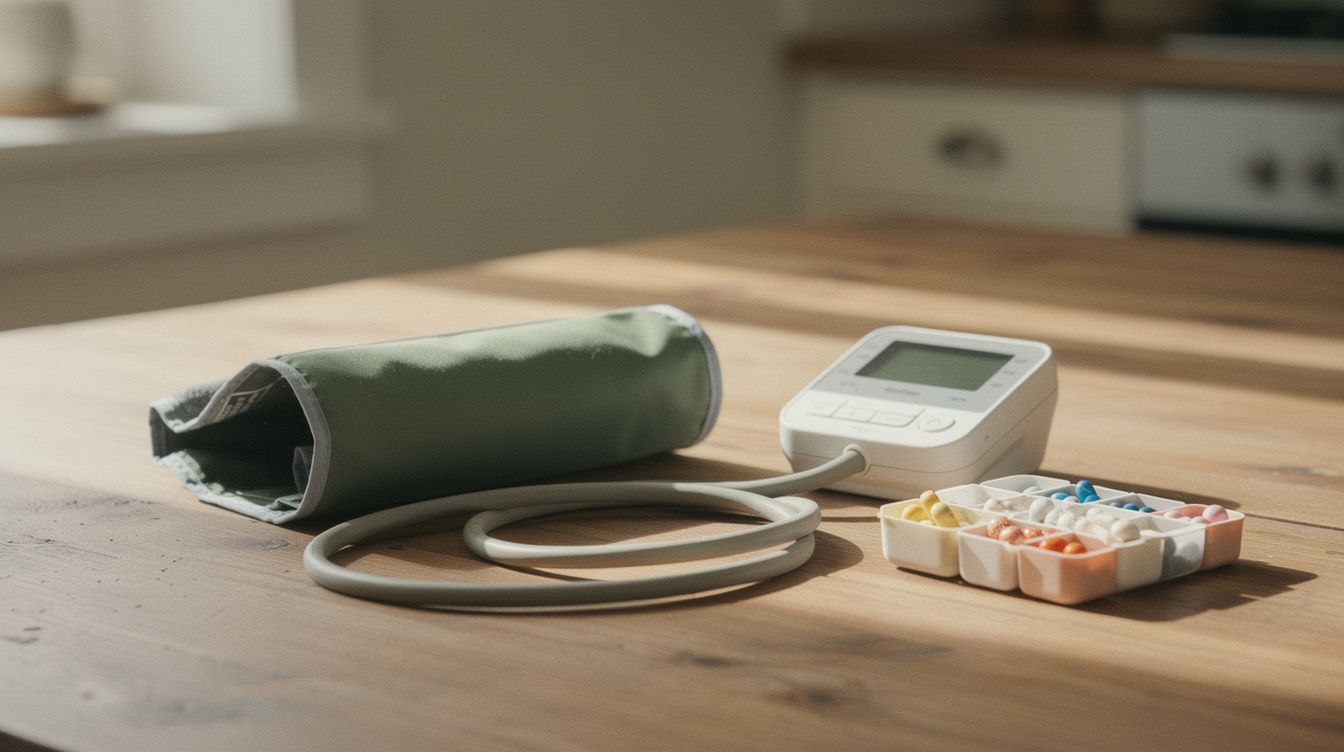
Most of what gets checked at a prenatal visit feels like a formality. The cuff goes on your arm, you pee in a cup, somebody writes a number down, and you move on to the part you actually came for. Those two checks are the whole reason preeclampsia gets caught as often as it does — and they are looking for something you usually cannot feel.
Preeclampsia is one of the few pregnancy complications where knowing five or six specific symptoms genuinely changes what happens next. This is what the medical sources say those symptoms are, what the numbers mean, why it can show up after the birth too, and the short list of things that mean call today rather than mention it Thursday.
This is general information, not medical advice
This article summarizes published guidance from the CDC, the NIH, the U.S. Preventive Services Task Force, and Cleveland Clinic. It is not a substitute for your own ob-gyn or midwife, and it cannot tell you whether what you are feeling right now is serious. If any symptom on this page sounds like you, call your provider — that call is always the right call, and they would far rather hear from you.
01What preeclampsia actually is
Cleveland Clinic describes preeclampsia as "a serious blood pressure condition that develops during pregnancy," marked by high blood pressure and high levels of protein in the urine. MedlinePlus, the National Library of Medicine's consumer health service, puts it as "a sudden increase in blood pressure after the 20th week of pregnancy" that usually includes signs of damage to organs such as the liver or kidneys.
That after-20-weeks part matters. Cleveland Clinic notes it usually develops after the twentieth week, with most cases in the third trimester. It is not rare: the U.S. Preventive Services Task Force states that preeclampsia complicates approximately 4 percent of pregnancies in the United States, and accounts for 6 percent of preterm births and 19 percent of medically indicated preterm births.
One old word you may still hear is toxemia. The NIH's NICHD says plainly that preeclampsia and eclampsia "previously were believed to be caused by a toxin, called 'toxemia,' in the blood, but health care providers now know that is not true."
02The signs worth memorizing
The CDC's urgent maternal warning signs are the clearest list we found, and several of them are classic preeclampsia symptoms. The CDC's instruction is short: "Seek medical care immediately if you experience any signs or symptoms that are listed below," and it tells people to watch for them "during pregnancy and in the year after delivery."
Call your provider the same day if you have any of these
- A headache that won't go away or gets worse over time. Not an ordinary pregnancy headache that fades with water and a nap — one that stays, or keeps building (CDC). Cleveland Clinic lists a severe, persistent headache among the reasons to contact the hospital.
- Changes in your vision. Blurred vision, sensitivity to light, or dark spots in your sight are all listed by Cleveland Clinic as preeclampsia symptoms, and "changes in your vision" is one of the CDC's urgent warning signs.
- Extreme swelling of your hands or face. Ankles that puff by evening are ordinary late pregnancy. Sudden, pronounced swelling of the face and hands is on the CDC's list and on Cleveland Clinic's.
- Pain high in the belly, under the ribs on the right side. Cleveland Clinic lists upper right abdominal pain; the CDC lists "severe belly pain that doesn't go away." It is easy to mistake for heartburn and it is not heartburn.
- Trouble breathing. Shortness of breath appears on both lists, and fluid in the lungs is one of the severe features Cleveland Clinic names.
- Dizziness or fainting, chest pain, or a fast-beating heart (CDC).
- Severe nausea and throwing up, particularly in the second half of pregnancy (CDC).
- Your baby's movement stopping or slowing during pregnancy (CDC).
The CDC adds a line that is worth more than the list itself: "This list is not meant to cover every symptom you might have. If you feel like something just isn't right, or you aren't sure if it's serious, talk to your health care provider." Nobody is going to be annoyed with you. Being wrong about this costs a phone call.
03What the numbers mean
Two blood pressure thresholds come up again and again, and knowing them makes your own readings legible.
- 140/90 mmHg or higher. Cleveland Clinic gives this as the blood pressure level associated with preeclampsia, and the same number applies to postpartum preeclampsia.
- 160/110 mmHg or higher. Cleveland Clinic describes this as the severe form — one of the "severe features" that changes how urgently it is treated.
- Protein in your urine. The second half of the diagnosis. It is why there is a cup at every visit, and it is something you cannot detect yourself.
Cleveland Clinic notes that providers usually find preeclampsia "during a routine prenatal appointment" by checking blood pressure and urine, then confirm it with blood tests for kidney and liver function, a 24-hour urine collection, ultrasound, and fetal monitoring. Which is the practical argument for not skipping the appointment that feels pointless — the pointless-feeling part is the screening.
04Who is more likely to get it
NICHD is direct about the cause: "The causes of preeclampsia and eclampsia are not known." Researchers are looking at placental abnormalities such as insufficient blood flow, genetic factors, nutritional factors, immune and autoimmune factors, cardiovascular and inflammatory changes, and hormonal imbalances — but no single trigger has been established. You did not cause this, and you cannot prevent it by eating differently.
What is known is who carries more risk. NICHD lists chronic high blood pressure or kidney disease before pregnancy, high blood pressure or preeclampsia in an earlier pregnancy, obesity, being older than 40, carrying more than one fetus, African American ethnicity, and a family history of preeclampsia. It also notes that a woman who had preeclampsia in a previous pregnancy is "seven times more likely to develop preeclampsia in a later pregnancy," and that conditions including diabetes, lupus, rheumatoid arthritis, gestational diabetes, and polycystic ovary syndrome raise the risk, as do pregnancies conceived through egg donation, donor insemination, or in vitro fertilization.
If several of those describe you, that is a conversation to have at your next visit rather than a reason to worry tonight — because there is something that can be done about it.
05Low-dose aspirin, for people at high risk
This is the one genuine prevention step with a formal national recommendation behind it. The U.S. Preventive Services Task Force recommends low-dose aspirin at 81 mg a day, started after 12 weeks of gestation, for pregnant people at high risk for preeclampsia. It is a Grade B recommendation, meaning the Task Force concluded with moderate certainty that the benefit is substantial — reducing the risk of preeclampsia, preterm birth, growth restriction, and perinatal death.
The Task Force's high-risk list is specific: a history of preeclampsia, carrying more than one baby, chronic high blood pressure, type 1 or type 2 diabetes that predates the pregnancy, kidney disease, and autoimmune disease such as lupus or antiphospholipid syndrome. Combinations of several moderate risk factors also count.
Don't start aspirin on your own
This is a prescription-level decision even though the pills are sold over the counter. The recommendation applies to people at high risk, as judged by a clinician who knows your history, and the Task Force's wording covers people with no prior adverse effects from low-dose aspirin. Ask your ob-gyn or midwife whether it applies to you — that is a five-minute question at a visit you already have booked, and our third trimester checklist and pregnancy checklist are good places to park it so it does not get forgotten.
06It can start after the birth, too
This is the part that surprises people, and it is the reason the CDC frames its warning signs as covering the year after delivery rather than just pregnancy.
Cleveland Clinic describes postpartum preeclampsia as "a serious condition related to high blood pressure after you give birth." It is "most common within 48 hours of delivery, but it can occur up to six weeks after your baby is born." The threshold is the same 140/90 mmHg, and the symptoms are the ones above: severe headache, vision changes, swelling of the face and hands, nausea and vomiting, pain under the ribs, reduced urination, rapid weight gain, shortness of breath, and chest pain.
Untreated, Cleveland Clinic warns it can lead to seizures, stroke, permanent brain damage, liver and kidney damage, fluid in the lungs, blood clots, HELLP syndrome, and death. Its guidance: go to the emergency room for a seizure or shortness of breath, and contact your provider right away for a headache, swelling of the hands and face, or vision changes.
The practical version of that is uncomfortable but simple. In the first weeks home, when you are exhausted and everything hurts somewhere, a bad headache is easy to file under "of course I have a headache." Don't. Our guides to postpartum recovery week by week and what postpartum bleeding is supposed to look like cover the rest of what is normal and what is not during that stretch.
07How it gets treated
Cleveland Clinic states it bluntly: "the only cure for preeclampsia is delivery." Everything else is management aimed at keeping you and the baby safe until delivery makes sense — blood pressure medication, closer monitoring, and magnesium sulfate to prevent eclampsia, meaning seizures. MedlinePlus describes the milder end of that as checking blood pressure at home, adjusting activity, medications that are safe in pregnancy, and more frequent visits, with hospitalization and early delivery for severe cases.
Which is why a diagnosis often reshuffles the end of a pregnancy. If yours does, two things help: having the bag already packed, and having the people lined up for the weeks after. Our hospital bag list handles the first, and if an early or complicated delivery means you come home with less in the tank than you planned on, overnight newborn help is one way to buy back sleep in the stretch where recovery actually happens.
08The short version to keep in your head
You do not need to memorize a medical article. You need five symptoms and one rule. The symptoms: a headache that won't quit, changes in your vision, sudden swelling of the face or hands, pain under the ribs on the right, and trouble breathing. The rule: those get a phone call the same day, during pregnancy and for weeks after the birth — and if something feels wrong and is not on any list, that gets a phone call too.
Everything else on this page is context for that one habit. And if you are still in the planning stretch, our free week-by-week timeline puts the prenatal visits, the questions worth asking, and the prep work in an order you can actually keep up with.
Questions parents actually ask
What are the first signs of preeclampsia?
Often there are none you can feel — it is usually found at a prenatal visit through a high blood pressure reading and protein in the urine. When symptoms do appear, Cleveland Clinic and the CDC list a headache that won't go away or gets worse, changes in vision such as blurring or light sensitivity, extreme swelling of the hands or face, pain in the upper right abdomen under the ribs, and trouble breathing. Any of those warrants an immediate call to your provider.
When does preeclampsia usually start?
After the 20th week of pregnancy. MedlinePlus describes it as a sudden increase in blood pressure after week 20, and Cleveland Clinic notes most cases develop in the third trimester. It can also appear for the first time after delivery — Cleveland Clinic says postpartum preeclampsia is most common within 48 hours of birth but can occur up to six weeks later.
What blood pressure reading means preeclampsia?
Cleveland Clinic gives 140/90 mmHg or higher as the level associated with preeclampsia, and 160/110 mmHg or higher as the severe form. A single high reading at home is not a diagnosis — blood pressure is only half of it, since the diagnosis also involves protein in the urine and blood work. Report a high reading to your provider rather than interpreting it yourself.
Can preeclampsia be prevented?
Not reliably, and nobody knows what causes it — NICHD states plainly that the causes of preeclampsia and eclampsia are not known. There is one evidence-backed step for people at high risk: the U.S. Preventive Services Task Force recommends low-dose aspirin, 81 mg a day, started after 12 weeks of pregnancy, for those at high risk. Whether that applies to you is a decision for your ob-gyn or midwife, not something to start on your own.
How common is preeclampsia?
The U.S. Preventive Services Task Force states that preeclampsia complicates approximately 4 percent of pregnancies in the United States. It also accounts for 6 percent of preterm births and 19 percent of medically indicated preterm births, which is why it gets screened for at every prenatal visit.
How is preeclampsia treated?
Cleveland Clinic states that the only cure is delivery. Until then, treatment focuses on management: blood pressure medication, closer monitoring, and magnesium sulfate to prevent seizures. MedlinePlus describes milder cases being managed with home blood pressure checks, activity adjustments, pregnancy-safe medication, and more frequent appointments, with hospitalization and early delivery for severe cases.
Sources
- CDC — Urgent Maternal Warning Signs (Hear Her) — The 15 urgent maternal warning signs including headache that won't go away or gets worse, changes in vision, extreme swelling of hands or face, severe belly pain that doesn't go away, trouble breathing, dizziness or fainting, chest pain or fast-beating heart, severe nausea and vomiting, and baby's movement stopping or slowing; instruction to seek medical care immediately; the signs apply during pregnancy and in the year after delivery; the note that the list is not exhaustive and to talk to a provider if something doesn't feel right.
- Cleveland Clinic — Preeclampsia — Definition as a serious blood pressure condition with hypertension and proteinuria; usually develops after the 20th week with most cases in the third trimester; 140/90 mmHg threshold and 160/110 mmHg as the severe form; symptom list including swelling, headaches, blurred vision, light sensitivity, dark spots, upper right abdominal pain and shortness of breath; diagnosis at routine prenatal appointments via blood pressure and urine, plus blood tests, 24-hour urine collection, ultrasound and fetal monitoring; severe features; the only cure is delivery; magnesium sulfate to prevent eclampsia; when to contact the hospital.
- Cleveland Clinic — Postpartum Preeclampsia — Definition as a serious condition related to high blood pressure after giving birth; most common within 48 hours of delivery but can occur up to six weeks after; 140/90 mmHg or higher; symptoms including headache, vision changes, swelling, nausea and vomiting, rib-area pain, reduced urination, rapid weight gain, shortness of breath and chest pain; untreated risks of seizures, stroke, permanent brain damage, liver and kidney damage, fluid in the lungs, blood clots, HELLP syndrome and death; go to the emergency room for seizures or shortness of breath.
- U.S. Preventive Services Task Force — Aspirin Use to Prevent Preeclampsia and Related Morbidity and Mortality — Low-dose aspirin 81 mg/day after 12 weeks of gestation for pregnant persons at high risk for preeclampsia; Grade B recommendation with moderate certainty of substantial net benefit for preeclampsia, preterm birth, small-for-gestational-age/growth restriction and perinatal mortality; high-risk factors list (history of preeclampsia, multifetal gestation, chronic hypertension, pregestational type 1 or 2 diabetes, kidney disease, autoimmune disease such as lupus or antiphospholipid syndrome, and combinations of moderate risk factors); preeclampsia complicates approximately 4% of US pregnancies and accounts for 6% of preterm births and 19% of medically indicated preterm births.
- NICHD (NIH) — Preeclampsia and Eclampsia: Causes — The causes of preeclampsia and eclampsia are not known; areas under investigation include placental abnormalities such as insufficient blood flow, genetic factors, environmental exposures, nutritional factors, maternal immunology and autoimmune disorders, cardiovascular and inflammatory changes, and hormonal imbalances; the old 'toxemia' explanation is now known not to be true.
- NICHD (NIH) — Preeclampsia and Eclampsia: Risk Factors — Risk factors including chronic high blood pressure or kidney disease before pregnancy, prior high blood pressure or preeclampsia, obesity, age over 40, carrying more than one fetus, African American ethnicity and family history; a woman who had preeclampsia in a previous pregnancy is seven times more likely to develop it in a later pregnancy; associated conditions including diabetes, lupus, rheumatoid arthritis, gestational diabetes and polycystic ovary syndrome; higher rates with egg donation, donor insemination and in vitro fertilization.
- MedlinePlus (NIH National Library of Medicine) — Preeclampsia — Preeclampsia as a sudden increase in blood pressure after the 20th week of pregnancy, usually with signs of damage to organs such as the liver or kidneys; symptoms including protein in urine, swelling of face and hands, persistent headaches, vision problems, upper right abdominal pain and breathing difficulty; treatment with home blood pressure monitoring, activity adjustments, pregnancy-safe medication and more frequent visits, with hospitalization and early delivery in severe cases.
Newborn Weeks is planning help, not medical advice — always follow your own doctor, midwife, or pediatrician.
From the gear guide
- Hauck Sport Travel Stroller — our pick in travel strollers
- Mompush Wiz 2-in-1 Stroller — our pick in travel strollers
- Aquaphor Baby Skin Care Set — our pick in diaper rash cream
- DiRose Breastmilk Storage Bags — our pick in milk storage
Keep reading
 Pregnancy · 14 min read
Cord Blood Banking: What It Costs, What It Treats, and What the AAP Recommends
Cord blood banking, explained: what it treats, what private banks charge, and why the AAP recommends donating to a public bank unless a sibling needs it.
Read the article Postpartum · 13 min read
Diastasis Recti After Pregnancy: How to Check for It and What Actually Helps
Diastasis recti affects 6 in 10 women after childbirth. How to check for the gap at home, which exercises help, which to skip, and when to call a provider.
Read the article Pregnancy · 13 min read
Heartburn During Pregnancy: Why It Happens and What Actually Helps
Heartburn during pregnancy hits up to 80% of pregnant people. Why it happens, what actually helps at night, and when it's worth calling your provider.
Read the article